
API Announces New Initiative to Encourage Veterans to Enter Natural Gas and Oil Industry

Pics 39

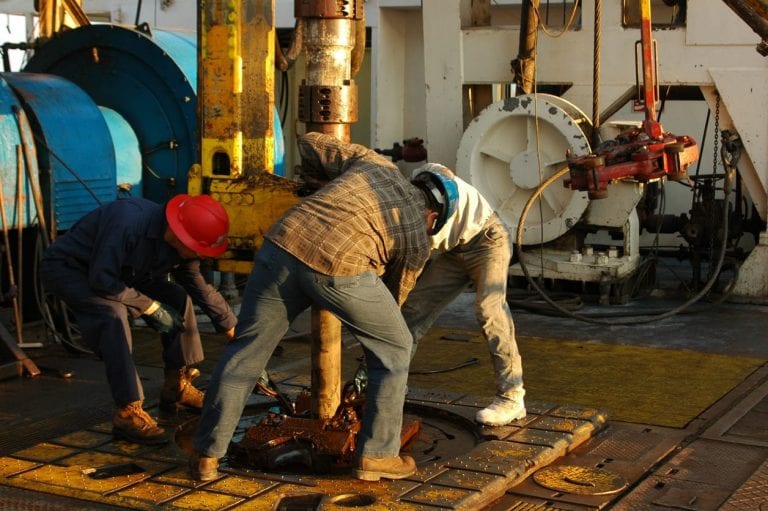
The American Petroleum Institute (API) is proud to announce a new initiative, Energy for Veterans, designed to attract more veterans and transitioning service members into meaningful and well-paying careers in the natural gas and oil industry. 

“Service members and veterans have a distinguished record of serving our country, both at home and abroad. Through their experience, they have developed skills that make them ideal candidates to launch careers in the natural gas and oil industry where their efforts will help to ensure America’s energy security for decades to come,” Senior Vice President of API Global Industry Services Anchal Liddar said. “Our industry is one of the most veteran-friendly in the country and is committed to helping our veterans as they transition to civilian life and look to build a strong financial future for themselves and their families.”

To attract the skilled workforce of the future, API is encouraging veterans and transitioning service members to apply their skills in the industry by obtaining professional credentialling through API’s Individual Certification Programs (ICP). Recognized worldwide for producing professional and expert inspectors, ICP offers 21 certifications that provide applicants with practical knowledge of relevant industry inspection codes and standards across various segments of the industry and related industries.

ICP certifications are approved for GI Bill funding by the U.S. Department of Veterans Affairs (VA) for the Web Enabled Approval Management System (WEAMs). Anyone who qualifies for the GI Bill (veterans, eligible spouses, and dependents) can utilize those funds to reimburse test fees for multiple ICP certifications.

API plans to develop additional programs and tools to help transitioning service members and veterans. More information can be found at api.org.


Source: American Petroleum Institute (API)

Similar Posts

  • Houston Area School Students Champion Technology To Help #EndTheStreak of Fatalities on Texas Roads

    FacebookXRedditPinterestEmailLinkedInWhatsApp Texas Transportation Commissioner Laura Ryan and Houston Independent School District officials recently joined TxDOT Houston District Engineer Eliza Paul, P.E. Texas Department of Public Safety (DPS) officials, the Kailee Mills Foundation, and students at the Young Women’s College Preparatory Academy of Houston to urge the public’s help to end the streak of traffic fatalities…

  • Texas Oil and Gas Production Statistics for August 2016

    FacebookXRedditPinterestEmailLinkedInWhatsApp AUSTIN –– Production for August 2016 as reported to the Railroad Commission of Texas (Commission) is 75,034,914 barrels of crude oil and 606,931,065 mcf (thousand cubic feet) of total gas from oil and gas wells. These preliminary figures are based on production volumes reported by operators and will be updated as late and corrected…

  • San Antonio City Council Approves Creation of Multimodal Transportation Commission

    FacebookXRedditPinterestEmailLinkedInWhatsApp In a major step toward building a safer, more connected transportation network, the San Antonio City Council passed an ordinance creating the Multimodal Transportation Commission. This new advisory body will provide input and recommendations on policies affecting not only drivers, but pedestrians, cyclists, and transit users. The commission’s creation follows a series of policy…

  • Port of Houston Awarded New Start for Ship Channel

    FacebookXRedditPinterestEmailLinkedInWhatsApp By Subcontractors USA News Provider The Port of Houston recently received notification from the U.S. Army Corps of Engineers (USACE) that it was awarded a “new start” designation and $19.5 million in federal funds to begin construction of the Houston Ship Channel Expansion Channel Improvement Project. That project was authorized in the Water Resources…

  • A DATA TRANSFORMATION IN AMERICA’S ENERGY FRONTIER

    FacebookXRedditPinterestEmailLinkedInWhatsApp Welcome to the oilfield of the future, where wells across hundreds of miles communicate with each other and operators can rely on data-driven insights and real-time automation to make faster, smarter decisions. Often found in remote corners of the world, these fields of the future will rely on a similar digital network that everyday…