

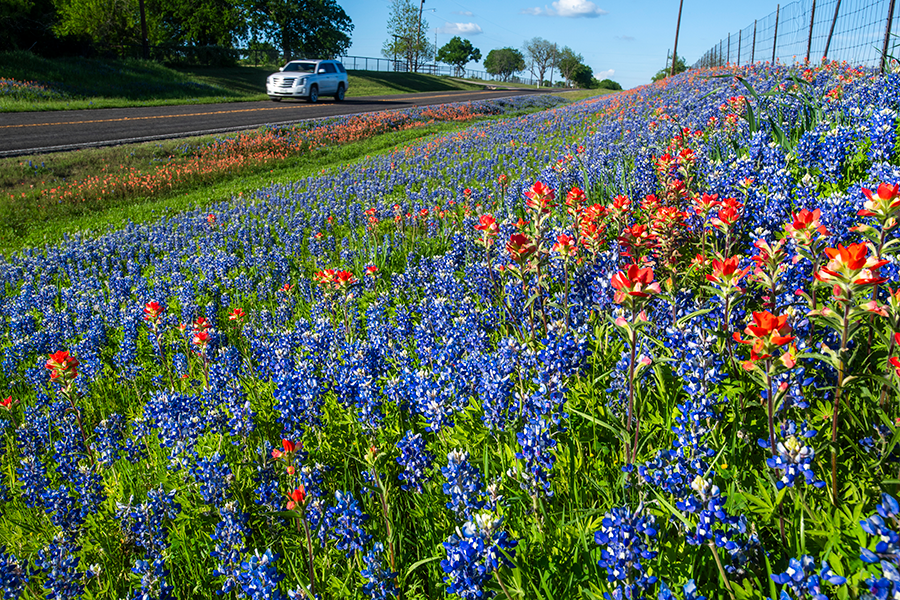
AUSTIN — It’s officially wildflower season in Texas. And while the plants and grasses blooming in fields and roadsides are native to the state, they didn’t all just sprout up overnight.
The Texas Department of Transportation has been planting and maintaining wildflowers on highway right of way since the mid 1930’s.
Vegetation Specialist Travis Jez said the TxDOT wildflower program works not just in springtime, but throughout the year.
“We’re lucky this time of year that the bluebonnets are coming along and making people aware of our native wildflowers and our programs,” Jez said. “Our overall objective is to have a regenerative side of the road that takes care of itself and is able to maintain itself.”
Some of the most prominent and popular wildflowers are Indian paintbrushes, Mexican hats, Indian blankets (firewheels), Drummond phlox, black-eyed Susans and, of course, bluebonnets. Our state flower actually includes five different individual species of bluebonnet, including the most widely recognized Lupinus texensis.
These wildflowers are perennials, which means they will grow back each year. But they still need to be planted in sparse areas and cared for to ensure they bloom in vibrant, healthy patches each spring.
The colorful beauties will be present along many roadsides during the April 8 total solar eclipse, which will be visible across a large part of Texas. To ensure the wildflowers look their best and can continue to come back year after year, please do not drive over, park on or trample through the flowers.
“If you’re going to take the time to look at bluebonnets along the road, just be very, very careful. Be safe,” Jez said.
Wildflower viewers and eclipse watchers alike should make sure to park in a designated area that is not on the side of a road. Leave the space how you found it, leaving no trace and taking all garbage with you to dispose of properly.
More than 5,000 species of wildflowers and native grasses decorate Texas roadsides. While part of their benefit is for beautification, they’re also important pollinator plants. Monarch butterflies rely on the wildflowers during their migrations, as do 900 other species of butterflies, bees, birds and various creatures.
To ensure the habitats are available for the ecosystems they support, TxDOT has a delayed mowing schedule during certain times of the year to let the plants grow strong and tall. Delaying mowing not only helps the environment, but it also is a cost-effective move that allows TxDOT to focus labor force and funding on other projects for a couple of months.
When TxDOT does mow the fields, it helps disperse seeds into the ground to sprout up the next season. In addition, it helps clear any debris covering the soil to allow for the seeds to make better contact.
Missy Lowe, TxDOT field support manager, said mowing typically begins June 1, ensuring most wildflowers have already stopped their blooming season and lost their petals.
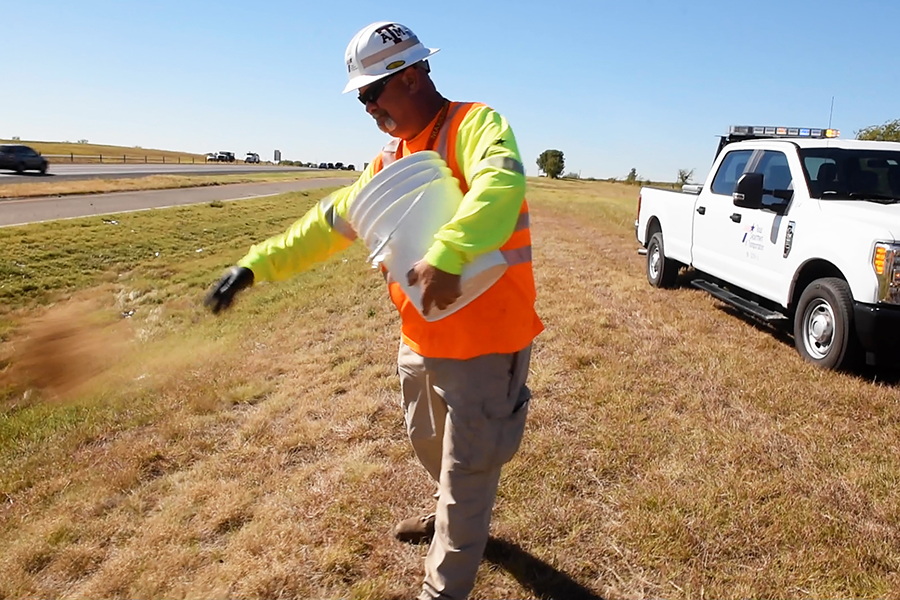
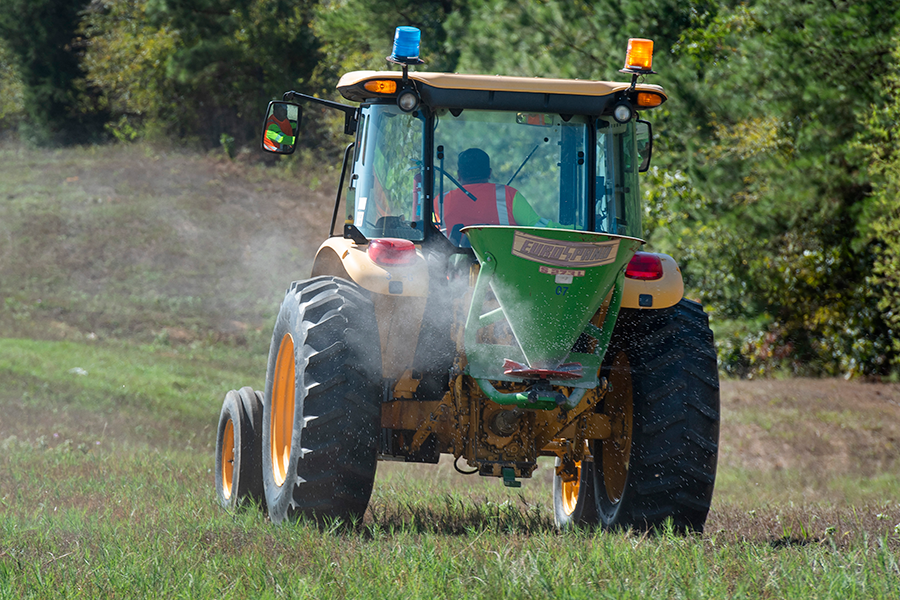
Depending on the need for more wildflowers in a certain area, TxDOT will plant up to 30,000 pounds of seeds each year. Most wildflower seeds, like bluebonnets, are planted in the fall, then germinate and grow through the winter.
“A lot of wildflowers need very good, cold weather whenever they germinate to help them. Some of them need more water than others,” Jez said. “This was a pretty good year for our bluebonnets.”
If you haven’t yet seen the bluebonnets and other colorful arrays of native wildflowers, maybe it’s time to take a drive. Different regions of Texas have unique collections of wildflowers, each tailored to the area’s location, climate and soil.
For more information about TxDOT’s Wildflower Program and about Texas wildflowers, visit www.txdot.gov/about/campaigns-outreach/bluebonnets-wildflowers.html.
By: TxDOT