

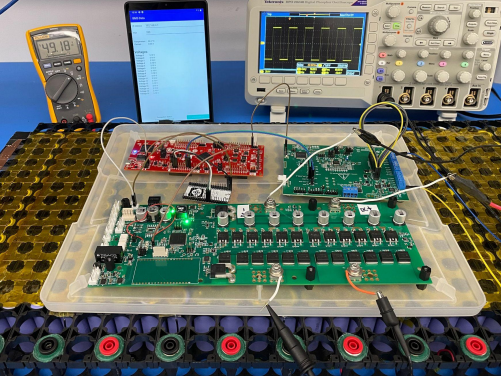
In a bid to enhance electric vehicle (EV) capabilities and promote sustainable transportation, groundbreaking battery technology is on the horizon. This innovation has the potential to redefine mobility and environmental responsibility by significantly extending the range of electric vehicles on a single charge.
The momentum toward realizing this technology has gained traction, with a research team from the Chandra Family of Electrical and Computer Engineering recently securing acceptance into the National Science Foundation’s National I-Corps program. This program is dedicated to expediting the translation of cutting-edge research into practical applications. The team’s focus is on advancing the commercialization of their M3 Battery Inverter technology.
The M3 Battery Inverter is a revolutionary technology that serves a dual purpose: it collaborates with batteries and an inverter, which converts DC power from the battery into AC power for motors. Unlike conventional electric vehicle battery systems controlled from a central point, the M3 Battery Inverter takes a novel approach. It divides the control of battery voltage and output power into smaller sections, finely adjusting the voltage and output power for each segment. By integrating with a traditional inverter that powers the entire battery pack, this technology offers greater flexibility in managing individual battery cells. Consequently, the M3 Battery Inverter enhances the efficiency of power and energy utilization in batteries.
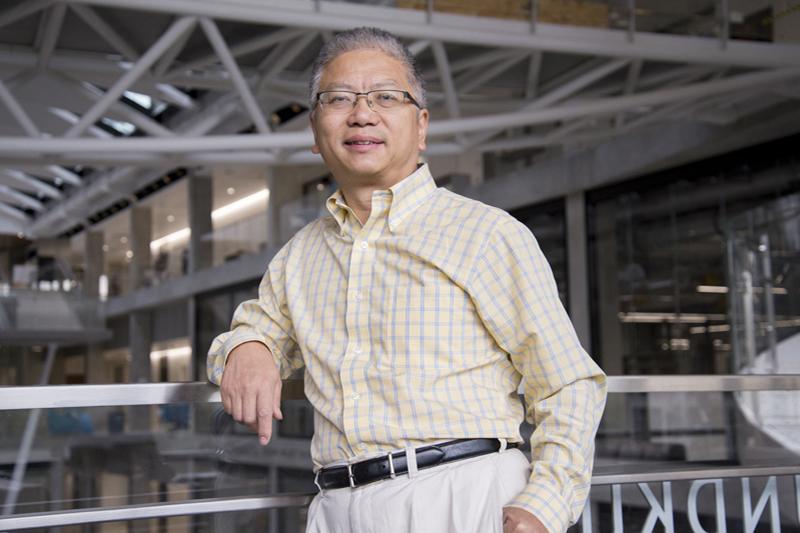
Alex Huang, a professor in the Chandra Family Department of Electrical and Computer Engineering at the University of Texas at Austin, is collaborating with his graduate students Peng “Patrick” Han and Rishab Anand, alongside their mentor from the Texas Venture Mentoring Service, Thomas Ortman. Ortman brings valuable experience in clean energy technology and startups to the team as part of the I-Corps program.
As the recipient of the NSF Partnership for Innovation-Research Partner grant, Huang expresses his enthusiasm for being involved in the I-Corps program. He highlights the exciting industry research partnership with BMW North America, emphasizing its goal to expedite the translation of research into practical applications.
“The acceptance of our team into the National I-Corps program is a thrilling opportunity to propel our research towards real-world applications,” said Huang. “We are confident that this technology has the potential to revolutionize the EV market by offering more affordable, efficient, and sustainable electric vehicles.”
The M3 Battery Inverter technology stands as a pivotal advancement for the sustainable future of the electric vehicle (EV) industry. Its potential impact includes heightened efficiency, reduced charging times, and overall improved performance, boasting an estimated 99% inverter efficiency and a 10% increase in vehicle range. The incorporation of granular battery management technology, integrated battery, and power electronics not only enhances safety, reliability, and battery life but also mitigates stress on weaker cells, elevating energy sustainability and battery efficacy.
This groundbreaking technology holds substantial promise for commercial applications in the rapidly growing EV industry, projected to reach a valuation of $986 billion by 2027.
Participating in I-Corps programming, Huang, along with Han, Anand, and Ortman, aims to navigate the commercialization landscape successfully. Their goal is to align their technology with market expectations concerning cost, range, charging time, safety, and charging infrastructure.
With the EV market’s continuous expansion, the demand for innovative solutions like the M3 Battery Inverter is anticipated to surge. Huang’s team is eager to leverage the support of the I-Corps program to propel their research forward. Their objective is to collaborate with EV original equipment manufacturers, further refining their technology and making a tangible impact in the realm of electric vehicles.
For those interested in contributing to the customer discovery process, Huang’s team welcomes visits to their website. Further information about the NSF I-Corps program can be found here.
Source: The University of Texas Austin