

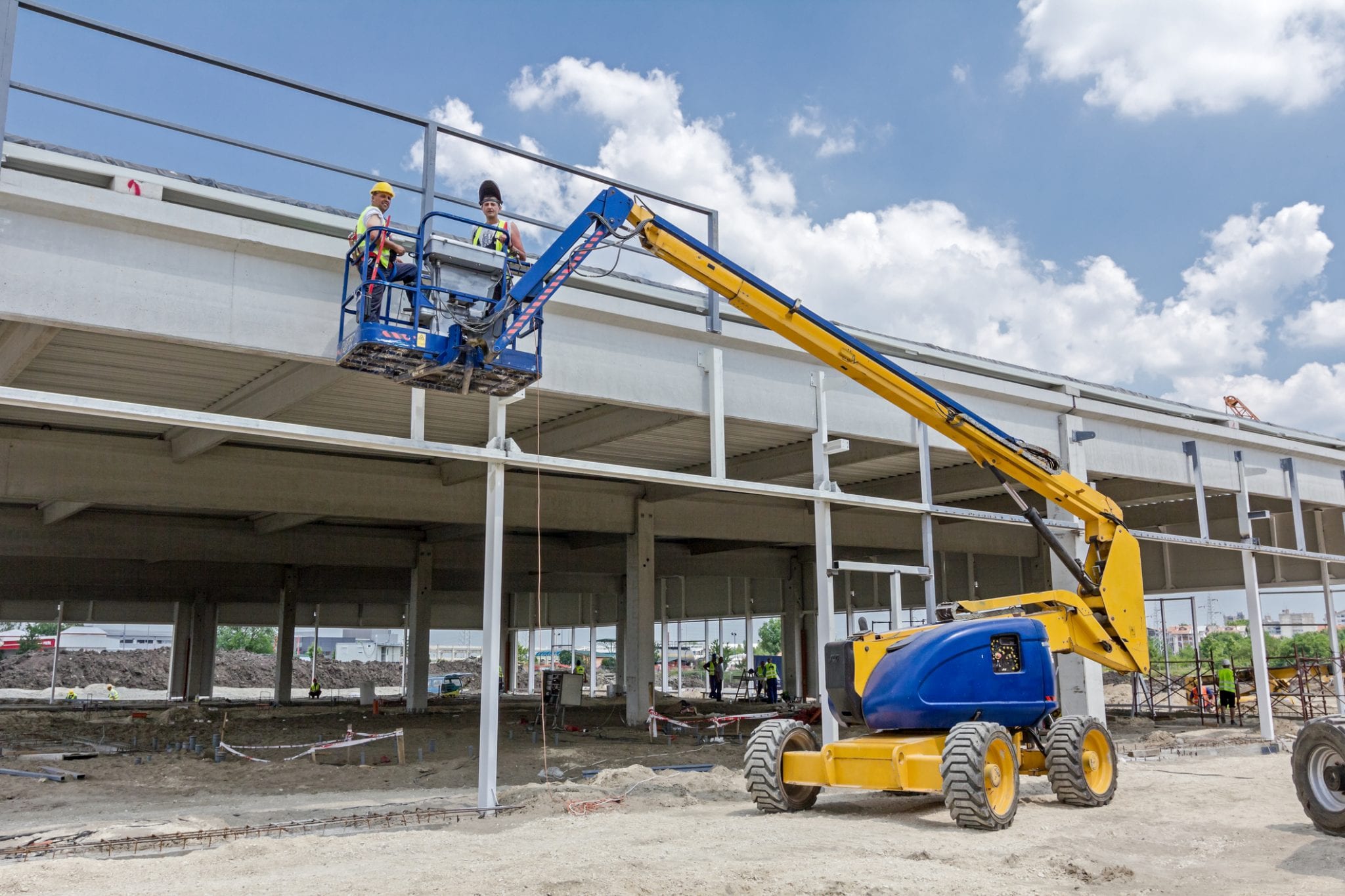
Boom lifts have been a popular type of equipment on construction sites for years. The lift’s versatility makes it a perfect choice for tasks that need to be completed at a significant height. However, operators need specialized training to use this type of aerial lift. To keep a work site safe, boom lift operators must be certified by a trusted source.
BOOM LIFT BASICS
To understand why boom lift certification is so important, it helps to learn the basics of how this equipment works. Also known as cherry pickers, boom lifts are comprised of a wheeled base, a hydraulic arm, and a basket at the top. On some boom lifts, the arm can bend or extend. Workers standing in the basket can use the controls to move the arm. Once in the correct position, they can complete their work while in the basket.
Boom lifts are useful for a variety of applications. You’ll often see utility workers using them on construction sites. Boom lifts can be used for painting, for making repairs on another large machine or for renovating the exterior of a building. They are also used as camera platforms for filming, and firefighters sometimes use them in emergencies. The name “cherry picker” comes from one of the original uses for the boom lift, which was harvesting fruit in orchards.
BOOM LIFT HAZARDS
Because the wheeled base is heavy, boom lifts keep workers stable as it lifts them upwards. However, there are some safety risks. Workers are up high, and they are sometimes extended out from the base at an angle. Here are four key safety risks when using a boom lift:
Falls: The most dangerous threat when using a boom lift is falling. Workers must move carefully when in the basket and move the arm at a slow, cautious pace. To help prevent falls, workers should always wear a safety harness that connects them to the basket. Railings around the basket can also help workers stay safe.
Tipping: Workers can extend the arm of a boom lift up and out from the wheeled base. This creates a tipping hazard if the arm is extended past a safe angle. Also, wind gusts can push the boom lift over. Boom lift operators must understand that the lift becomes less stable the more they extend the arm. It’s important to be aware of weather conditions, the total weight in the basket, and other factors that may increase the risk of tipping.
Collisions: The operator can move both the base and the arm of the boom lift. This movement increases the risk for collisions both on the ground and in the air. Operators must be aware of their surroundings to avoid aerial and ground-level obstacles.
Electricity: Boom lifts are often used for aerial electrical work. While the lift makes it easier to complete this work, there is an increased risk of electric shock. The basket is usually made of metal, which can transfer electricity to workers if you and your crew don’t take proper precautions.
TRAINING FOR BOOM LIFT OPERATORS
Due to the safety risks of using a boom lift, all operators must be trained and certified. Training for this type of machinery consists of several parts, such as instruction on how to use the controls. Workers learn about safety risks and how to avoid them. Training also covers how maximum load capacity works and explains how to perform regular inspections.
Workers may have to be retrained periodically, especially if they are required to use a new type of aerial lift. Most workplaces also require retraining if workplace hazards are discovered or after an accident occurs.
BOOM LIFT CERTIFICATION
Workers must complete a certification process to operate a boom lift. In fact, it is required by the Occupational Safety and Health Administration (OSHA). Violation of this requirement can result in fines for the employer.
Employers may require proof of certification upon hiring. In other cases, employers may pay for their workers to complete the training and certification process. Workers who have completed OSHA-approved training receive a Certified Operator card.
While boom lifts pose some risks, operators can use them safely with the right training, certification and workplace safety precautions.
Source: Associated General Contractor