

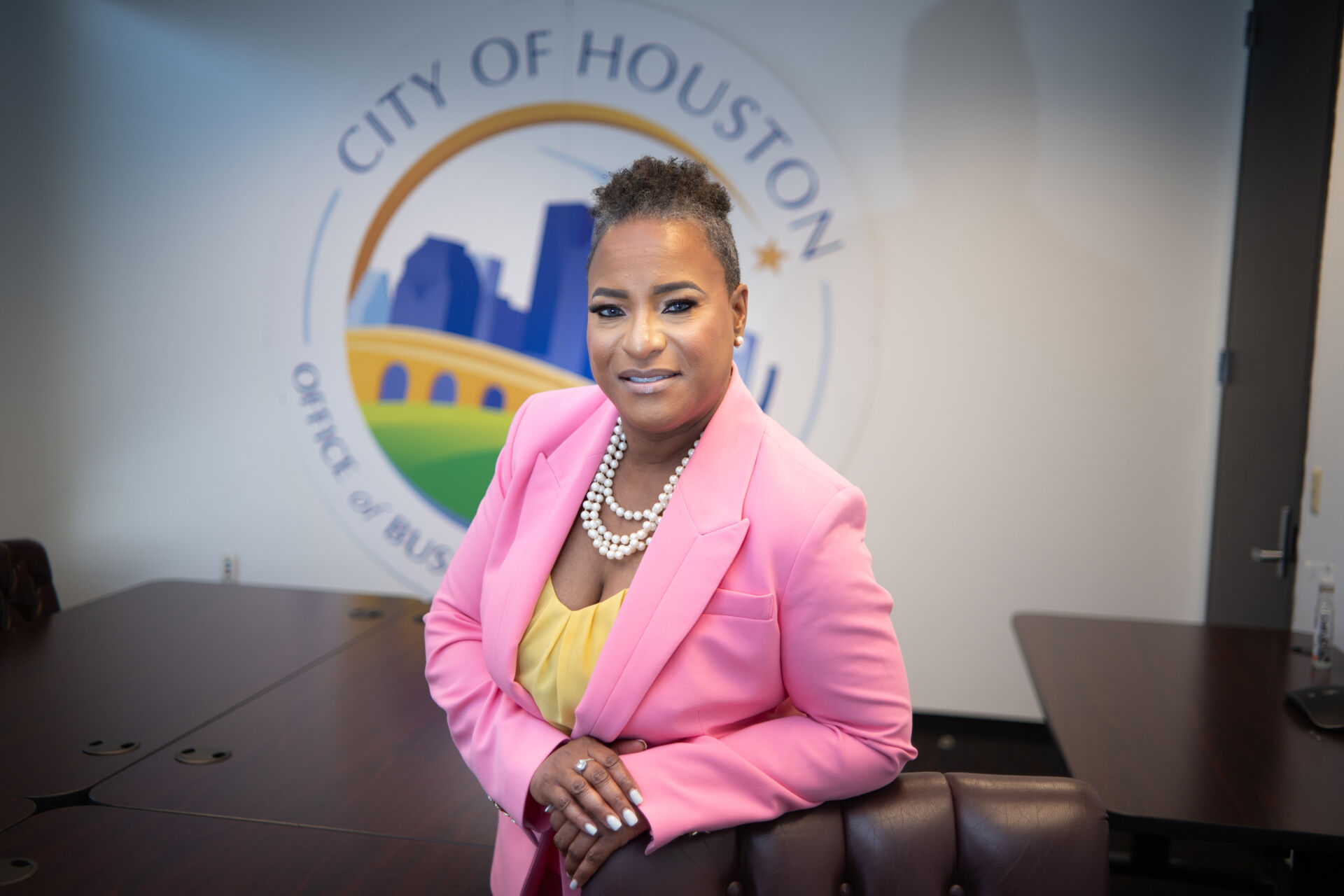
Alabama-native Cylenthia Hoyrd has spent her career in the public sector working with nonprofits and government agencies that help the underrepresented. Hoyrd has been with the city of Houston for over ten years, first serving as the Administration Manager for the Houston Public Library before joining the Office of Business Opportunity in 2023 and becoming its Interim Director a year later. Recently, the program has faced some unprecedented difficulties, including a lawsuit in 2023 that questioned its constitutionalism, and a landmark vote in May that could have changed its entire makeup. She spoke with Subcontractors USA for an exclusive interview.
Subcontractors USA: What are your thoughts on the vote to keep OBO as is?
Cylenthia Hoyrd: I was thrilled that we finally progressed with this vote. It was essential to establish a program that could stand up constitutionally, based on the new data. Without this data, we cannot have a constitutional program. The study enables us to move forward with specialized programming to include everyone.
S: There were complaints from Hispanic and Asian groups that funding is going to only a few businesses within those communities. Is that true, and then how do you prevent this going forward?
CH: It’s important to understand there are many significant contracts awarded to some prime contractors that are not certified firms. At the same time, several of our certified firms do secure work. One measure we implemented, which was passed with the ordinance, is the Personal Net Worth (PNW) guideline. This means that individuals cannot enter the program if their personal net worth exceeds $2,047,000.
The program still upholds size standards that are similar to those of the SBA, which helps us manage how large a firm can become. Additionally, we are closely monitoring our data more frequently between studies to identify any shifts or changes. We also release an MWBE report every quarter, which is available on our website under the reports section. However, it seems that very few people pay attention to it. It details the awards to all firms by industry, department, and racial group.
S: A lot of this does fall on them getting in touch with you and reaching out. How do you encourage those that aren’t doing that; those who are complaining that they’re not seeing any of this money?
CH: There are a few things to consider:
- Attending bid meetings is essential. It’s important to meet the prime contractors, send emails, set up appointments, and understand who their buyers are. Making that introduction is key.
- We plan to take several actions. There are contracts where we will connect prime contractors with subcontractors they haven’t previously worked with. Additionally, we need to ensure that we have enough contractors to complete the work. If we don’t have sufficient resources, we may need to unbundle some of the tasks.
S: Let’s go ahead and discuss local program insights.
CH: It’s important for us to collaborate with our partners who offer certifications in the private sector. Some individuals build their business models around government contracting, and I would advise against that approach. I am looking to work with outside certifiers in the private sector to create connections with larger companies. This will help ensure that these businesses receive continuous work, enabling them to transition from the public sector to the private sector. This shift will also free up opportunities for our mid-sized companies.
S: What is your timeline to get a lot of this out there?
CH: There are several timelines to consider. We will be introducing veteran certification in July, marking the beginning of the new fiscal year. Next we’ll evaluate our minority and women’s programs to determine their future direction. By January 2026, we can expect to see significant changes within the department, including a rotation of small contractors, new programming, access to capital initiatives, and improvements related to the certification timeline and compliance.
S: What moves OBO into the future? What’s the next big thing?
CH: Data drives us into the future. While we rely heavily on data, we often don’t share it. I believe we need to be more transparent and streamline our processes. We frequently receive criticism regarding the timeline for our certifications. We have reviewed and mapped our processes, and I believe in the next few months our stakeholders will see big changes and shorter timelines.
I would love to create a small business hub where businesses can come together, collaborate, offer discounts to one another, and engage in business-to-business activities. I’m working with a partner on this and there is more to come.
S: Let’s run down some of these Chapter 15 ordinances, because I know there are big changes.
CH: Some of the new elements included in Chapter 15 are related to personal net worth, as previously discussed. We are focusing on disabled veterans and veteran-owned small businesses. In our procurement process, these businesses will receive extra points if they include veteran participation in their contracts.
We have also expanded our Small Business Enterprise (SBE) program. Previously, SBE was limited to construction and had a cap on participation. Now, there is no cap, and we have implemented an SBE race-neutral program across all purchasing sectors of the city.
Additionally, we are adding wraparound services, such as access to capital. We are collaborating with community development financial institutions (CDFIs) to provide resources like lines of credit to businesses.
I’ve been speaking with various stakeholders about creating a pipeline for laborers, HVAC technicians, and CDL drivers that contractors can utilize.
We have a small contractor rotation program for some construction projects, and we aim to expand this initiative. If you are a small contractor, we will open it up once a year for contracts that we anticipate will become available. This initiative will give subcontractors the opportunity to act as prime contractors by establishing direct agreements with the City. We will also introduce incentive programs to encourage our prime contractors to engage new firms they haven’t worked with before.
S: It seems like we should be looking forward to transparency and making connections.
CH: We are currently working on creating a dashboard for our website, where entities can view their standings. This will prevent any surprises during our next disparity study.
S: Is there one last thing you’d like to share with us, and can you tell people how to get in touch with you?
CH: Although we are living in unprecedented times, the situation is very dynamic. The program has a strong foundation, and we will adapt and continue to support small businesses.
They can email me at obo.director@houstontx.gov or call the office or visit our website. Additionally, they can enroll in our OBO Solution Center newsletter. We send out an e-blast every Monday that includes our activities, director updates, events, training sessions, and information from our partners.