

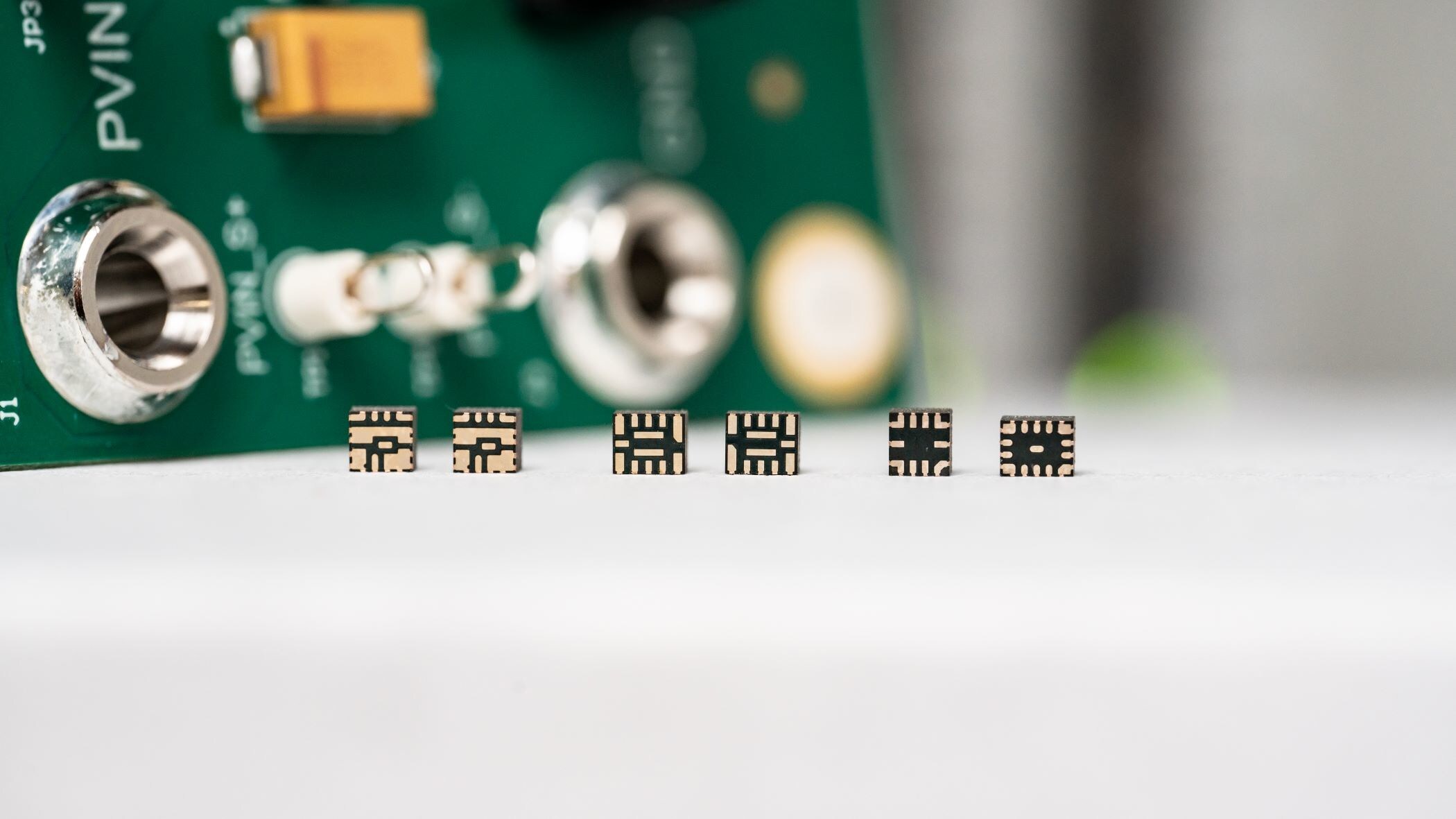
DALLAS — Texas Instruments introduced six new power modules designed to improve power density, enhance efficiency and reduce EMI.
According to a news release, these power modules leverage TI’s proprietary MagPack integrated magnetic packaging technology, shrinking their size by up to 23% compared to competing modules, enabling designers of industrial, enterprise and communications applications to achieve previously impossible performance levels. Three of the six new devices, the TPSM82866A, TPSM82866C and TPSM82816, are the industry’s smallest 6A power modules, supplying an industry-leading power density of nearly 1A per 1mm2 of area, TI explained.
“Designers turn to power modules to save on time, complexity, size and component count, but these benefits have required a compromise on performance – until now,” said Jeff Morroni, director of power management research and development at TI’s Kilby Labs. “After nearly a decade in the making, TI’s integrated magnetic packaging technology enables power designers to meet the defining power trend that has shaped our industry – pushing more power in smaller spaces efficiently and cost-effectively.”
Pushing More Power in Smaller Spaces
In power design, TI says size matters. Power modules simplify power designs and save valuable board space by combining a power chip with a transformer or inductor in one package. By leveraging TI’s exclusive 3D package molding process, MagPack packaging technology maximizes the height, width and depth of the power modules to push more power in a smaller space.
The magnetic packaging technology includes an integrated power inductor with proprietary, newly engineered material. As a result, engineers can now achieve best-in-class power density and reduce temperature and radiated emissions while minimizing both board space and system power losses. These benefits are especially important in applications such as data centers, where electricity is the biggest cost factor, with some analysts predicting a 100% increase in demand for power by the end of the decade.
With decades of expertise, innovative technology, and a portfolio of more than 200 devices with optimized package types for any power design or application, TI says its power modules help designers push power further.
Source: Texas Instruments