
U.S. Department of Labor Updates Frequently Asked Questions To Address Cloth Face Coverings as Personal Protective Equipment

iStock 1214565315 scaled

By Subcontractors USA News Provider

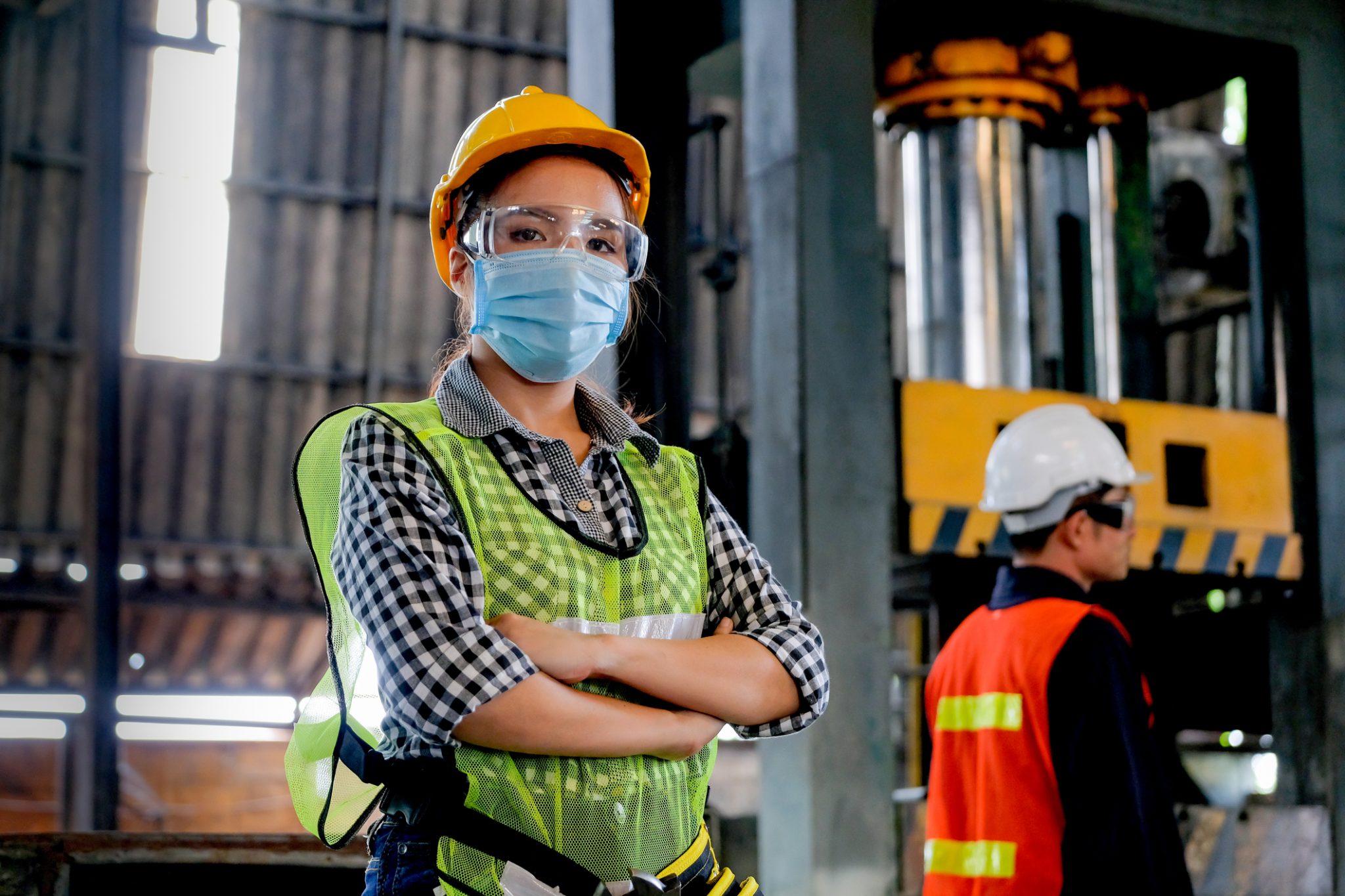
The U.S. Department of Labor’s Occupational Safety and Health Administration (OSHA) has published an update to its Frequently Asked Questions (FAQ) to address whether OSHA considers cloth face coverings to be personal protective equipment. The agency is addressing the topic after the Centers for Disease Control and Prevention (CDC) recently determined that some cloth face coverings may serve as source control while also providing the wearer with some personal protection.

The FAQ states that OSHA does not believe enough information is currently available to determine if a particular cloth face covering provides sufficient protection from the coronavirus hazard to be personal protective equipment under OSHA’s standard. OSHA’s determination is consistent with statements made by the CDC, which has stated it needs more research on cloth facemasks’ protective effects, particularly on the combination of materials that maximize blocking and filtering effectiveness.

OSHA continues to encourage workers strongly to wear face coverings when in close contact with others to reduce the risk of spreading the coronavirus, if it is appropriate for the work environment.

Visit OSHA’s COVID-19 webpage for further information and resources about the coronavirus.

Under the Occupational Safety and Health Act of 1970, employers are responsible for providing safe and healthful workplaces for their employees. OSHA’s role is to help ensure these conditions for America’s working men and women by setting and enforcing standards, and providing training, education and assistance. For more information, visit www.osha.gov.

The mission of the Department of Labor is to foster, promote and develop the welfare of the wage earners, job seekers and retirees of the United States; improve working conditions; advance opportunities for profitable employment; and assure work-related benefits and rights.

Source: OSHA
Similar Posts

  • Texas Central Reaches Another Milestone With Addition of Salini Impregilo for Limited Notice to Proceed

    Salini Impregilo brings global experience, having built more than 4,000 miles of railway infrastructure, and will lead civil construction consortium Selection of multinational civil engineering contractors strengthens civil construction group for Texas line Announcement marks latest addition of expertise on America’s first high-speed train project Texas Central, developers of the high-speed train, has engaged the…

  • Texas Tests its First Plastic Road

    If you’re driving through Rockwall, you’d never guess the road beneath your tires is made with plastic—literally. In a first for Texas, Sahadat Hossain, director of the Solid Waste Institute for Sustainability and a professor of civil engineering at The University of Texas at Arlington, has partnered with the Texas Department of Transportation’s Dallas district to pave a…

  • CPS Energy News: Condition Your AC System, Not to Overwork

    By John Moreno, CPS Energy Contributor South Texas is known for its sprawling pastures, longhorns and sizzlin’ summers. To help beat the heat, customers are cranking down their thermostats to stay cool and comfortable. How does that affect utility bills and budgets? Those lower thermostat settings can lead to much higher energy usage and bills….

  • 3 key reasons to continue construction training even amid the pandemic

    Historically, companies will do two things when times get tough: They will curtail their training departments and sales departments.  The world was not prepared for the coronavirus, and there is no denying companies are facing hard decisions. Some companies have been required to do reduction in workforce because projects have been delayed.  Although halting training…