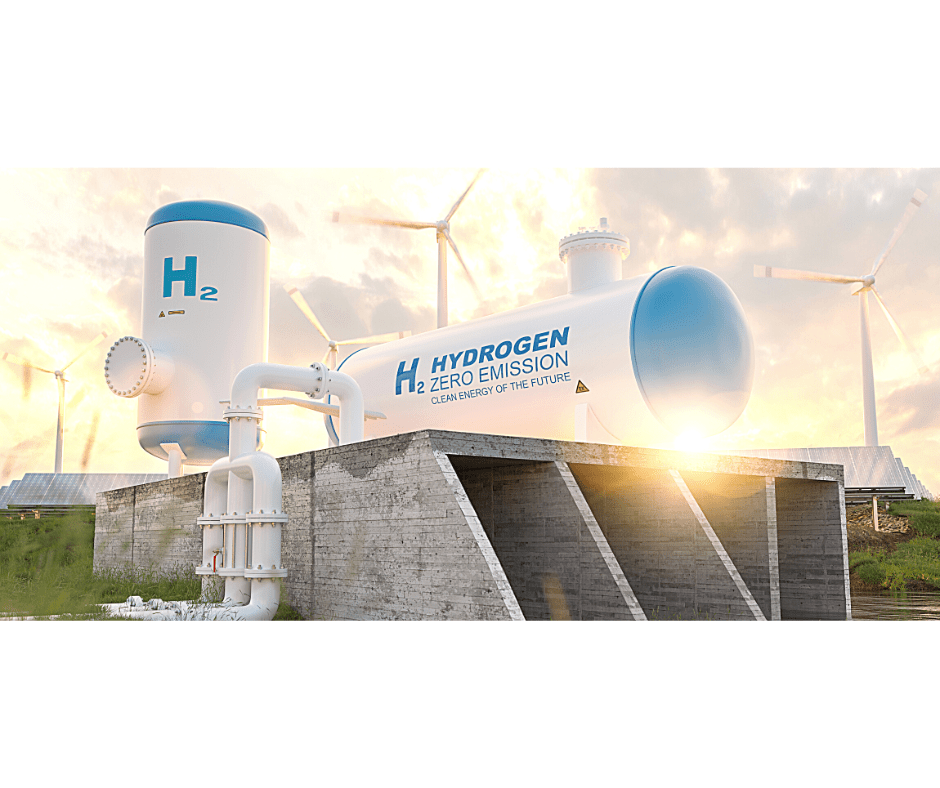
The American Petroleum Institute (API) recently released a new analysis of the benefits of low-carbon hydrogen produced from natural gas. The study, commissioned by API and conducted by ICF, found that hydrogen produced from natural gas with carbon capture and produced from electricity and other energy sources could eliminate an additional 180 million metric tons of greenhouse gas (GHG) emissions on average per year through 2050 and save over $450 billion cumulatively through 2050 when hydrogen incentives are uniformly provided based on a per ton of GHG emissions reduced.
“Our industry is committed to advancing innovative technologies like low-carbon hydrogen, which are crucial to reducing GHG emissions economy-wide,” said API Vice President of Corporate Policy Aaron Padilla. “Working together with policymakers to incentivize all forms of low-carbon hydrogen and accelerate hydrogen production through programs under the Bipartisan Infrastructure Law, we can drive down emissions while ensuring American consumers have access to the reliable energy they need.”
API analysis of the study’s findings shows that uniform incentives for producing hydrogen from natural gas, electricity, and other energy sources are critical to meeting the U.S. Department of Energy goal of 50 MMT of clean hydrogen produced by 2050, as laid out in the recently published National Clean Hydrogen Strategy and Roadmap.
Highlights from the report include:
- Larger Hydrogen Market: When every ton of emission reductions is incentivized the same, the U.S. hydrogen market could be three times larger by 2050 than when emission reductions are treated unequally (i.e., the hydrogen market could be 15% of total end-use energy consumption in 2050 versus 4% of total end-use energy consumption in 2050).
- Larger GHG Emission Reductions: The larger hydrogen economy resulting from uniform incentives could avoid an additional 183 million metric tons of U.S. GHG emissions on average per year through 2050 than if incentives were unevenly implemented by taking advantage of low-cost options, like hydrogen produced from natural gas with carbon capture. Enabling incentives for all hydrogen production is equivalent to eliminating the emissions from more than 38 million cars annually, according to API analysis.
- Less Costly Emission Reductions: Uniform incentives could reduce the cost of mitigating a metric ton of carbon by an average of 12% annually over the study period, saving over $450 billion cumulatively through 2050.
The study found that critical hydrogen infrastructure, like hydrogen storage, pipelines, and local distribution systems, will be required to unleash hydrogen’s potential to contribute to significant GHG emissions reductions. Capital investment in hydrogen infrastructure projects could exceed $400 billion by 2050 and include the construction of 67,000 miles of hydrogen transmission pipeline, 500,000 miles of customer laterals and local distribution company pipeline/service lines, and 560 trillion Btu of hydrogen underground storage capacity.
For more information or the full report, please visit api.org.
Source: American Petroleum Institute (API)