
Driving on Science

checking the quality of road asphalt 1

When we drive on Texas roads, the last thing we think about is what our tires are rolling on. But behind every mile of every road, science is at work. At the TxDOTโ€™s Materials and Tests division lab, even the smallest detail is studied to get you safely to your destination.

A team of experts analyzes every crack, every concrete mix, and every microscopic particle they receive from all over the state to check if they meet safety standards. This testing is known as petrographic analysis.

โ€œPetrographic analysis is essentially the use of microscopy, mineralogy, geology, and chemistry to look at different failures in the roads and do forensic analysis,โ€ said Maria Hruska, technical project manager at TxDOTโ€™s Petrographic Lab.

This lab uses advanced technology to study the materials that make up our roads, such as the scanning of electron microscopes.

โ€œThey are extremely useful in doing very, very fine, detailed work and helping us see stuff that even normal microscopes wouldn’t be able to see,โ€ said Hruska.

This equipment studies the road in depth almost as if it were a medical exam, using technology that is also used in hospitals, to detect any damage that is invisible to the human eye.

โ€œSomething that starts off really small, once it starts spreading it can cause some really large scale cracking. And it’s actually known as concrete cancer,โ€ said Hruska.

checking the quality of road asphalt 2
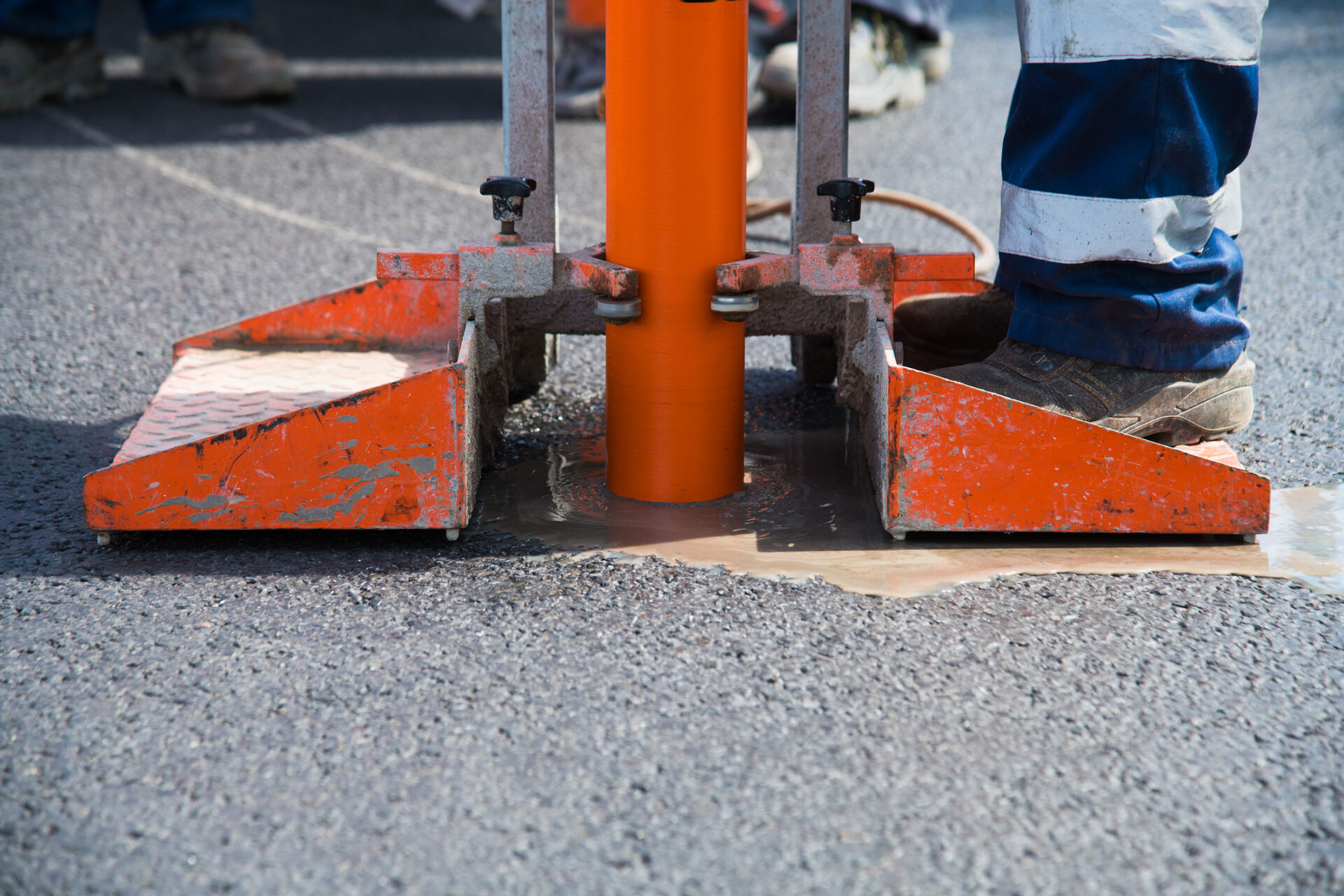
Checking the quality of road asphalt. Using a special tool, samples are taken to measure the thickness and quality of the asphalt surface

In one of the most recent cases, the lab was sent samples of concrete that was failing strength tests. At first glance, it seemed like nothing was wrong with it, but the analysis revealed a surprise.

โ€œWe found out that actually air had been mixed into that concrete, so much that it weakened it by about 30%. And that concrete actually had to be removed,โ€ Hruska said.

In addition to advanced microscopes, the team also uses technology used in space, known as Laser Induced Blast Spectroscopy (LIBS) scope.

โ€œIt’s actually the technology that’s used on the Mars rover. A laser will essentially hit the surface and do an elemental analysis,โ€ Hruska said.

Beyond the technology, the team adapts each analysis to the unique climate conditions of every corner of Texas. But despite all this advanced technology and effort, safety on the road is up to all of us.

โ€œWe put so much time and energy and effort into making sure these roadways as safe as possible, but at the end of the day, you still have to drive like a Texan: kind, courteous and safe,โ€ Hruska said.

TxDOT works hard to improve safety in every nook and cranny on Texas roads, but it takes a team effort of engineers, law enforcement and drivers working together to save lives and prevent crashes.

Source: TxDOT (Edited by Subcontractors USA)

Similar Posts

  • U.S. Department of Labor Reminds Employers To Avoid Compliance Issues By Ensuring Worker Safety, Proper Pay Practices This Holiday Season

    FacebookXRedditPinterestEmailLinkedInWhatsApp By Subcontractors USA News Provider With the National Retail Federation expecting retailers to hire more than 500,000 seasonal workers and employers hopeful for a busy holiday season, the U.S. Department of Labor reminds them not to overlook their workerโ€™s rights to a safe and healthy workplace and to be paid all of their legally…

  • 8 Steps to Follow When Completed Construction and Failed to Pull a Building Permit

    FacebookXRedditPinterestEmailLinkedInWhatsApp Three years ago, one of the most devastating storms to hit the Texas Gulf Coast caused over $125 billion in damage and made a horrendous impact in the Houston area.  Today, the PermitUsNow continues to receive phone calls from Contractors, Architects, and property owners with pleas for assistance in obtaining building permits to restore…

  • Top contractors partner with AI firm to prevent jobsite accidents before they happen

    FacebookXRedditPinterestEmailLinkedInWhatsApp Following up on aย studyย in which Smartvid.ioโ€™s artificial intelligence engine โ€œVinnieโ€ learned from contractor Suffolk’s data to predict roughly one in five safety incidents with 81% accuracy, nine major construction firms areย partnering with the software companyย to further develop predictive analytics and therefore prevent incidents and reduce risk across the industry, according to a Smartvid announcement…

  • How and Why to Keep Up With the Latest Tech Trends

    FacebookXRedditPinterestEmailLinkedInWhatsApp (StatePoint) Whatever industry you work in and no matter what your role is, itโ€™s possible you have wondered how emerging technologies will affect your job in the years to come or whether youโ€™ll even have to switch careers entirely at some point. Experts say that while such concerns are understandable, embracing the newest tech…

  • San Antonio Energy News: CPS Energy Releases RFP for Enterprise Resource Plan Initiative

    FacebookXRedditPinterestEmailLinkedInWhatsApp CPS Energy, the largest municipally owned, fully-integrated electric and natural gas utility in the United States, formally launched a Request for Proposals (RFP) as the company seeks new technology platforms to better serve customers and employees. The RFP seeks vendor(s) to replace its current company-wide Enterprise Resource Planning (ERP) software platforms, including Software as…

  • US Department of Labor Initiates Rulemaking to Protect Workers, Outdoors and Indoors, From Heat Hazards Amid Rising Temperatures

    FacebookXRedditPinterestEmailLinkedInWhatsApp By Subcontractors USA News Provider Record-breaking heat in the U.S. in 2021 endangered millions of workers exposed to heat illness and injury in both indoor and outdoor work environments. Workers in outdoor and indoor work settings without adequate climate-controlled environments are at risk of hazardous heat exposure, and workers of color are exposed disproportionately…