
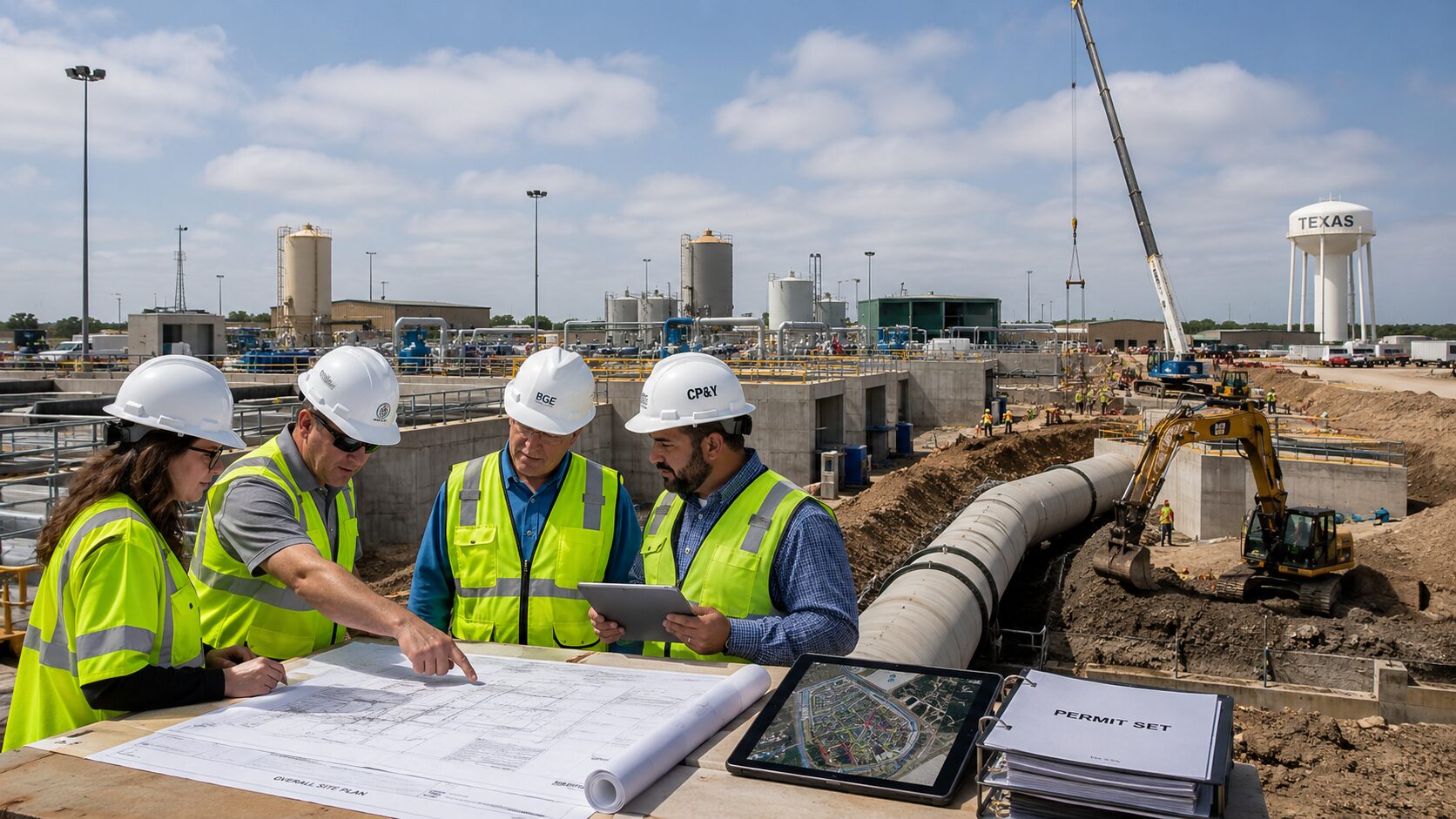
Texas Water Infrastructure Projects are entering a critical phase as billions of dollars in funding move toward water supply, wastewater treatment and utility expansion efforts across the state. From major metropolitan areas like Houston, Dallas-Fort Worth and San Antonio to rapidly growing regional authorities and rural communities, public agencies are racing to modernize aging systems, improve resiliency and keep pace with population growth. Yet while the scale of investment is historic, delivering these projects involves far more than securing funding and completing technical designs. Water infrastructure projects in Texas must navigate a highly complex regulatory environment involving local municipalities, state agencies such as the Texas Commission on Environmental Quality (TCEQ), federal environmental reviews and coordination with agencies like the U.S. Army Corps of Engineers. As timelines tighten and infrastructure demands continue to grow, understanding how permitting, compliance and regulatory approvals intersect has become one of the most important factors in determining whether projects move forward on schedule and within budget.
I recently attended the Texas Water Conference is in San Antonio, Texas. This was a joint annual conference between the Water Environment Association of Texas and the Texas Section American Water Works Association. This conference hosted a plethora of industry professionals from all areas including public owners, utilities, engineers, contractors, regulators, manufacturers, and service providers to discuss water challengers, share ideas and review how projects can be advanced across the state.
And while I know that there are billions of dollars in water and wastewater infrastructure projects moving across Texas right now. From the City of Houston to the Brazos River Authority and other regional agencies, the scale of work is significant to keep up with growth demands which I have written about on several occasions.

With the pressures from key drivers, capturing the source of funding is a feat and then proceeding with the technical design is another important aspect that public owners deal with to deliver water infrastructure solutions.
Water projects do not make it through the chute by funding and design alone, regulatory approval is the critical milestone that makes or hinders are project from delivering on time and in budget.
Here’s what I know for sure is that when it comes to regulatory approvals for water infrastructure projects.
Approvals are not singular…meaning one entity and done!
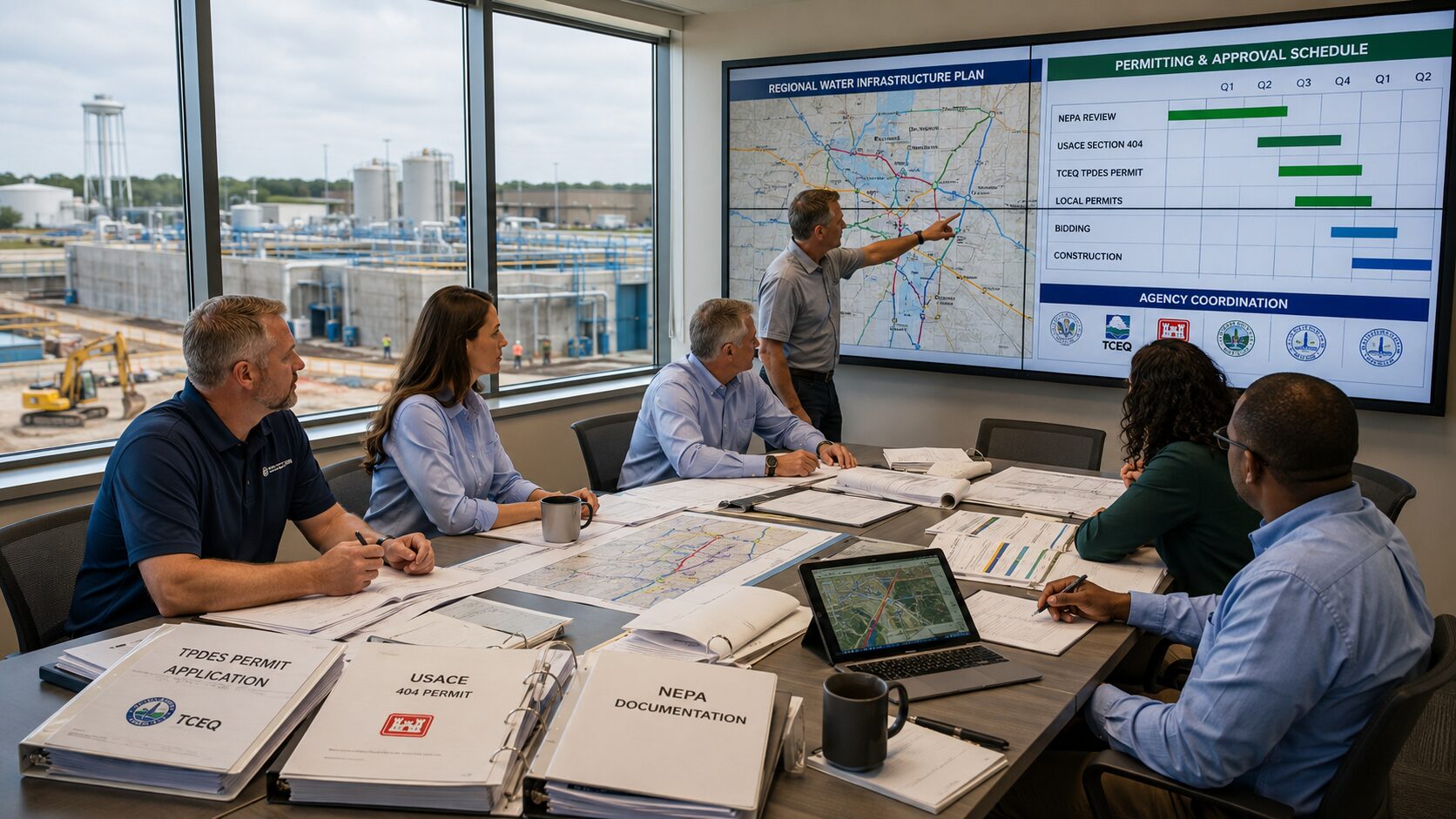
On local municipal and county water and wastewater projects, you are often working across multiple regulatory frameworks at the same time. At the federal level, environmental review under NEPA may be required depending on funding and project scope. Coordination with the U.S. Army Corps of Engineers can introduce additional considerations where jurisdictional waters or wetlands are involved. And at the state level, TCEQ governs permitting pathways including TPDES permits, amendments, and renewals.
Again, depending on the scope, at the local level, additional approvals and coordination must align with both state and federal processes.
And the key takeaway is that each of these regulatory actions operate on its own timeline and risks.
Many projects may be technically ready but are not fully aligned with regulatory agencies. And this misalignment often creates project delays and adds to owners’ frustrations.
Knowing how reviews unfold and the strategies to sequence across multiple agencies is vital for major projects to start construction on time, hit key milestones dates and to be delivered on time when promised to the community.
To Summarize
On large infrastructure projects, you are not just submitting permits. You are managing a regulatory compliance process across multiple agencies, timelines, and disciplines. This takes skill and the right knowledge to move expeditiously through multiple agencies’ staff, processes and systems.
If you are navigating multiple agencies and approvals on a water or wastewater project, it may be worth evaluating how those efforts are aligned early.