Forklift Safety Training is one of the most effective ways to prevent workplace accidents, injuries and costly equipment damage. Whether operating in warehouses, manufacturing facilities, construction sites or distribution centers, forklift operators face daily hazards that require proper skills, awareness and adherence to safety procedures. As employers continue to prioritize workplace safety, investing in comprehensive Forklift Safety Training helps ensure operators understand equipment limitations, recognize potential risks and follow best practices that protect both workers and jobsite operations.
Forklifts are among the most commonly used pieces of equipment in warehouses, manufacturing facilities, construction sites and distribution centers. They are also among the most dangerous when not operated properly.
According to the Occupational Safety and Health Administration (OSHA), forklift operators and employees working around forklift operations face risks that include collisions, falls, tip-overs and struck-by incidents. These accidents can result in serious injuries, property damage and even fatalities if proper safety procedures are not followed.
Safety experts emphasize that preventing forklift accidents begins with proper operator training and a commitment to following established safety practices.

Operators should always use forklifts according to the manufacturer’s instructions and never exceed the vehicle’s rated load capacity. Loads should be stable and balanced before moving, and operators should avoid raising or lowering loads while the forklift is in motion. Maintaining control of the load helps reduce the risk of tip-overs and falling materials.
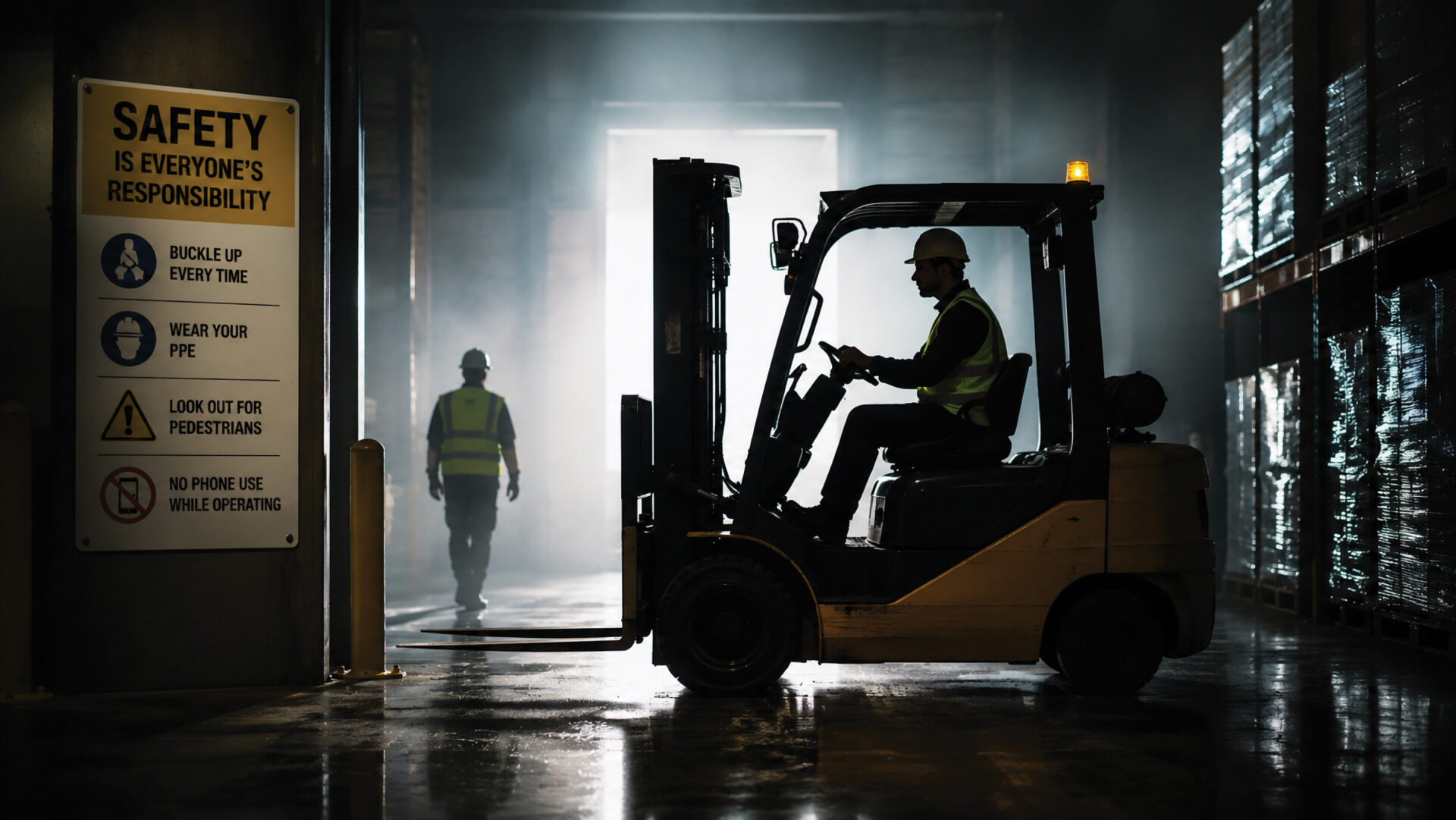
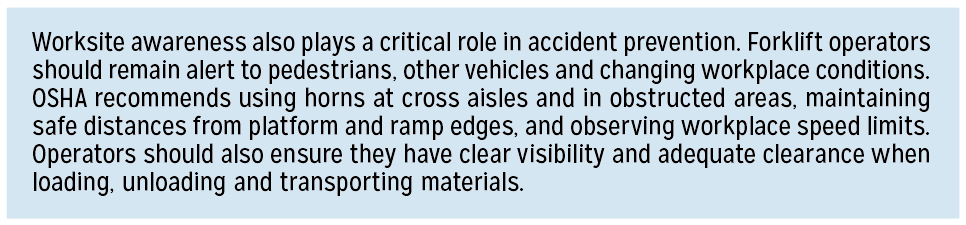
Worksite awareness also plays a critical role in accident prevention. Forklift operators should remain alert to pedestrians, other vehicles and changing workplace conditions. OSHA recommends using horns at cross aisles and in obstructed areas, maintaining safe distances from platform and ramp edges, and observing workplace speed limits. Operators should also ensure they have clear visibility and adequate clearance when loading, unloading and transporting materials.
Simple practices can make a significant difference. Operators should always wear seat belts when equipped, use proper footing and handholds when entering and exiting forklifts, and never use forklift forks to lift workers or provide rides to passengers.
Training remains one of the most important elements of forklift safety. OSHA requires that only trained and certified employees operate forklifts. Employers should ensure operators receive instruction specific to the types of trucks used within their facilities and understand the unique hazards associated with their work environments.
Maintenance is equally important. Forklifts found to be in unsafe operating condition should be removed from service immediately. Regular inspections, proper repairs and routine maintenance performed according to manufacturer recommendations help ensure equipment remains safe and reliable. OSHA also advises keeping forklifts clean and free of excess oil and grease, which can contribute to operational hazards.
As workplaces continue to prioritize safety, forklift operations remain an area where preparation, awareness and accountability can save lives. By investing in training, maintaining equipment and following established safety procedures, employers and employees can work together to reduce risk and create safer environments for everyone on the job site.
SUMMARY
Forklift Safety Training plays a critical role in reducing workplace accidents and protecting employees who operate or work around forklifts. OSHA emphasizes that proper training, equipment maintenance, situational awareness and adherence to safety procedures are essential for preventing collisions, tip-overs and struck-by incidents. By investing in operator education and maintaining a strong safety culture, employers can create safer work environments and reduce the risk of injuries, property damage and costly downtime.
Source: OSHA.gov