


The Port Houston Economic Impact continues to grow as the Port Commission advances major infrastructure, terminal expansion and international trade initiatives supporting the Houston Ship Channel region. During its August meeting, Port Houston highlighted a new economic impact study showing that activity along the Houston Ship Channel supports nearly $1 trillion in economic value across the United States while generating jobs and business activity throughout Houston, Texas and the nation.
During opening remarks, Chairman Ric Campo recognized Port Houston employees for donating essential supplies to families affected by the recent earthquake in Venezuela. Working with industry partners, the donations are being shipped directly to those in need.
Chairman Campo also highlighted community initiatives supporting local students and neighborhoods, including an outdoor classroom and garden improvements at Whittier Elementary that will benefit 320 students.
The Commission received an update on the findings of a new economic impact study conducted by Martin Associates, which found that activity at the public and private facilities along the Houston Ship Channel supports nearly $1 trillion in economic value across the U.S. while driving jobs and business activity throughout the region, Texas and the nation. Additional information can be found in the press release.
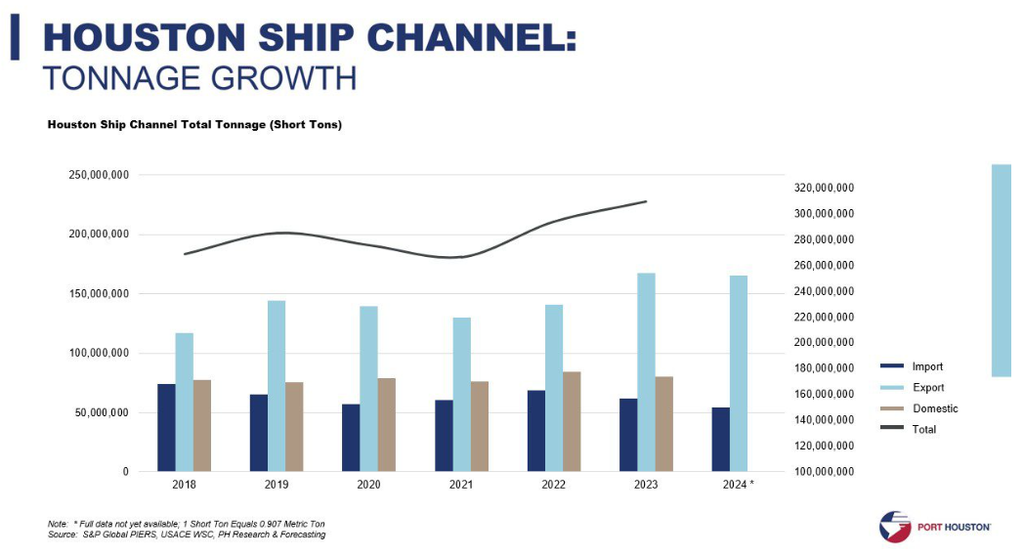
Port Houston CEO Charlie Jenkins emphasized the need for state investment in port-adjacent roadways ahead of the 2027 budget process, following his recent testimony before the Texas House Transportation Committee alongside industry stakeholders.
“Investment and growth of the adjacent roadways haven’t kept pace with the cargo growth and has become a critical choke point,” said Jenkins. “We are going to continue to speak about this on behalf of our entire port region.”
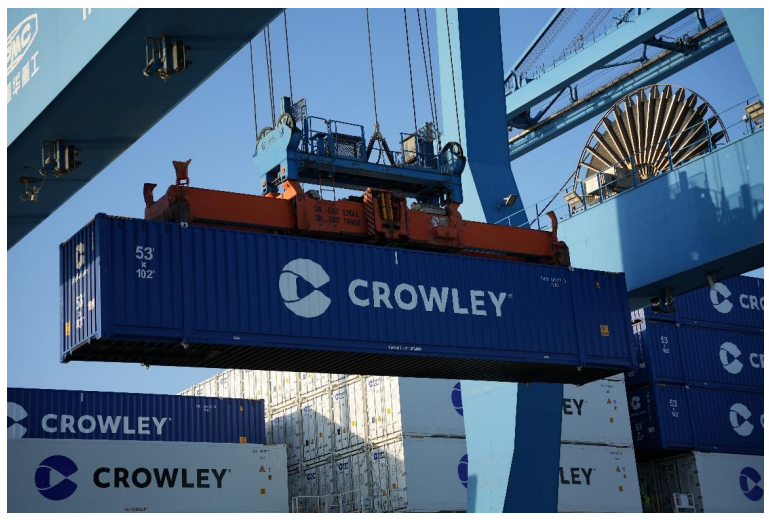
Port Houston also recently announced that Crowley’s new weekly Gulf-Central America Express Service will connect Houston directly with major trade gateways in Central America beginning September 10. To support the service, Commissioners approved the purchase of two Hyster reach stackers to safely and efficiently handle its 53-foot containers.
The Commission received an update on cargo activity through July. Additional information can be found in the Houston Ship Channel Region Monthly Trade & Market Report released on August 20.
Additional Meeting Updates:
- Port Houston held an August 4 joint agency kickoff meeting for the Barbours Cut North Terminal Expansion following its acceptance into the FAST-41 program, which supports more transparent, predictable and timely federal environmental reviews and authorizations.
- The Commission approved a marine construction permit allowing Houston Jacintoport, LLC to convert an existing barge dock into a ship dock and increase the volume of cement moving through its terminal.
- The Commission authorized a marine construction permit allowing the Texas Historical Commission to close and reclaim the former Battleship Texas berth and establish a marsh wetland behind a new bulkhead.
- Port Houston broke ground on a new Maintenance Building Annex at Bayport Container Terminal to expand maintenance capacity for ship-to-shore and rubber-tired gantry cranes and support terminal operations, with completion expected in the fourth quarter of 2027.
- The Commission authorized the purchase of network infrastructure to provide reliable and resilient connectivity for the new Port Command Center and its critical Port Security and Emergency Operations functions.
Summary
The Port Houston Economic Impact is approaching $1 trillion as continued cargo growth, terminal expansion and infrastructure investment strengthen the Houston Ship Channel region. Port Houston is advancing projects at Barbours Cut and Bayport, supporting new international shipping services and calling for additional investment in port-adjacent roadways. Together, these initiatives demonstrate the port’s growing role in supporting trade, jobs, business activity and the movement of goods throughout Texas and the United States.
Source: Port Houston