Houston-Based Archaea Energy, UGI Celebrate Renewable Natural Gas Plant Start-Up in Pennsylvania

Picture2 1

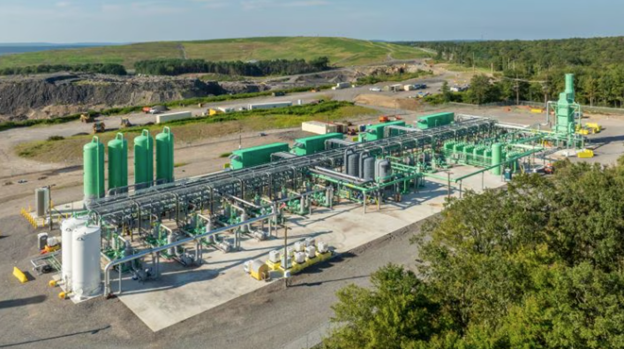
HOUSTON — Archaea Energy, a subsidiary of bp, and UGI Energy Services, LLC, a subsidiary of UGI Corporation, celebrated the start-up of their joint venture’s renewable natural gas plant in Hegins, Pennsylvania.

According to a news release, the companies formed the Aurum Renewables joint venture (JV) to develop and own the RNG plant, which is adjacent to the Commonwealth Environmental Systems landfill in Schuylkill County. The plant came online in September. 

“Pennsylvania is a critical state for Archaea and it is playing a pivotal role in the energy transition. The state’s robust infrastructure and commitment to sustainable development make it an ideal location for advancing RNG technologies. This is the third RNG plant we’ve brought online in the Keystone State, and we look forward to opportunities for further development,” Archaea Energy CEO Starlee Sykes said.

Archaea built and operates the JV’s plant, which uses the Archaea Modular Design (AMD). Traditionally, RNG plants have been custom-built, but the AMD allows plants to be built on skids with interchangeable components. 

This AMD plant will convert landfill gas, a natural byproduct of the decomposition of waste, collected from the Commonwealth Environmental Systems landfill into RNG, the use of which can lead to local air quality benefits and diversity of domestic energy production, according to the US EPA.

“We are pleased to see Aurum Renewables come online as this facility will provide communities with valuable use for landfill gas,” said Joseph Hartz, President of UGI Energy Services. “UGI is investing in differentiated and innovative energy solutions, which includes RNG. With the help of our partners, we are creating low carbon energy for Pennsylvania while helping our customers achieve their own sustainability goals.”

The Aurum Renewables plant can reportedly process up to 9,600 standard cubic feet of landfill gas per minute (scfm) into RNG – enough gas to heat more than 39,000 homes annually, according to the EPA’s Landfill Gas Energy Benefits Calculator.  

Source: bp
Similar Posts

  • Exploring Climate Engineering at CERAWeek

    Introducing reflective clouds and sequestering carbon captured from the ocean to mitigate Earth’s temperature may seem like ideas from science fiction, but these geoengineering methods are already a reality, as discussed by a panel of experts at CERAWeek by S&P Global’s Climate Hub.

  • OSHA’s COVID-19 Guidance for the Workforce

    FacebookXRedditPinterestEmailLinkedInWhatsApp By Subcontractors USA News Provider OSHA is committed to protecting the health and safety of America’s workers and workplaces during these unprecedented times. The agency continues to issue a series of industry-specific alerts designed to keep workers safe.  COVID-19 Guidance for Food Truck Workers: The following steps can help reduce the risk of exposure…

  • Debt Collection, Part 1: Reducing Your Risk

    FacebookXRedditPinterestEmailLinkedInWhatsApp It’s been three months and your client still hasn’t paid his overdue bill for the work you performed. What do you do now? Fortunately, the State of Texas has laws in place that protect business owners, allowing you to collect on a debt, but only when the proper protocols are followed. The Cromeens Law…

  • Texas Central Reaches Another Milestone With Addition of Salini Impregilo for Limited Notice to Proceed

    FacebookXRedditPinterestEmailLinkedInWhatsApp Salini Impregilo brings global experience, having built more than 4,000 miles of railway infrastructure, and will lead civil construction consortium Selection of multinational civil engineering contractors strengthens civil construction group for Texas line Announcement marks latest addition of expertise on America’s first high-speed train project Texas Central, developers of the high-speed train, has engaged…

  • The PEER Initiative: Protecting Employees, Enabling Reemployment

    FacebookXRedditPinterestEmailLinkedInWhatsApp Each year, Federal civilian employees sustain work-related injuries and illnesses. In 2018, Federal workers filed almost 107,000 new claims and received approximately $3 billion in workers’ compensation payments. Many of these work-related injuries and illnesses are preventable, and executive departments and agencies can and should do more to improve workplace safety and health, improve…