

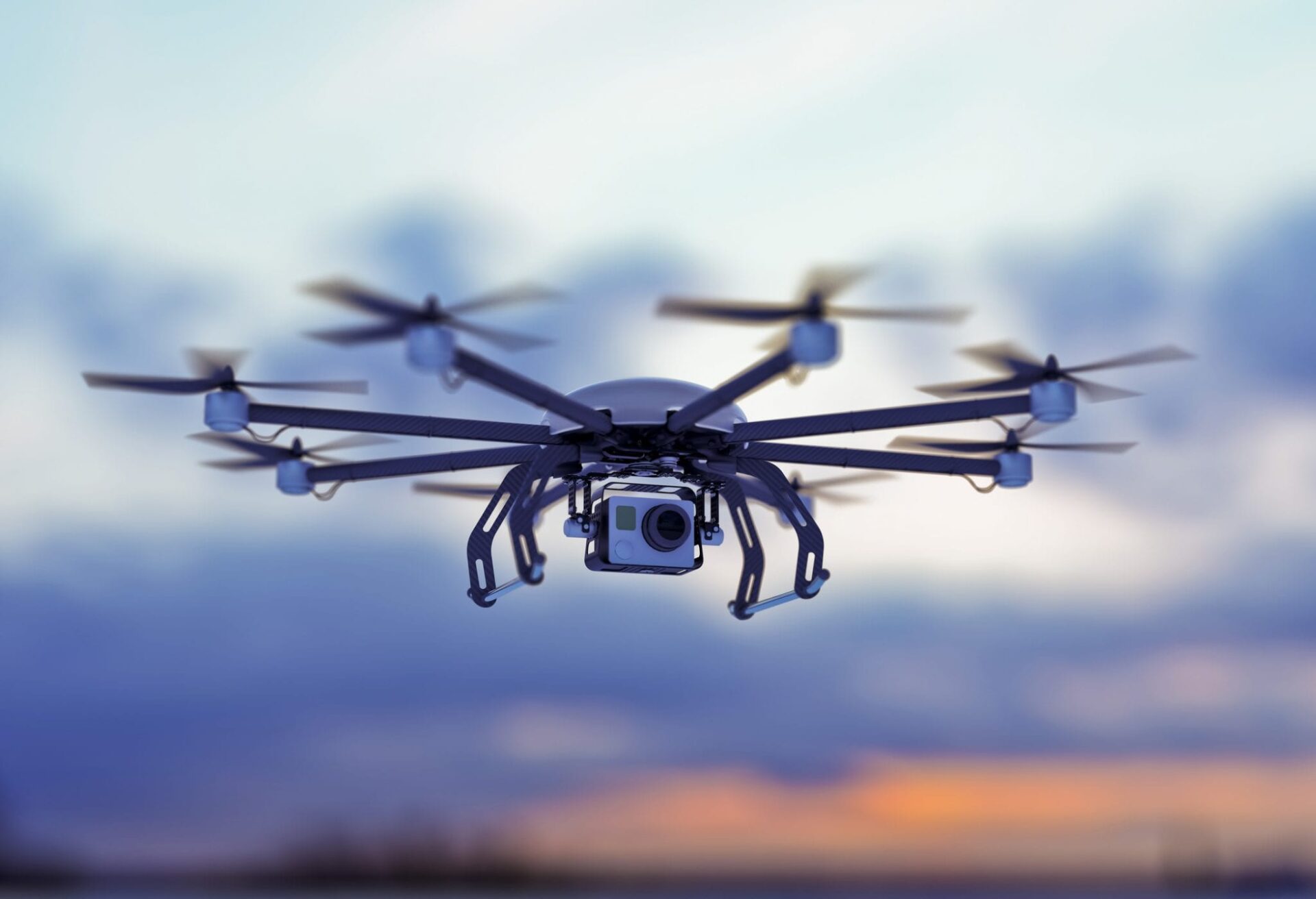
Just a few years ago, enterprise adoption of drones was out of reach for even the largest contractors, due to tight Federal Aviation Administration regulations and limited options in the drone hardware and software marketplace.
But with the development of the Small Unmanned Aircraft System (UAS) Part 107 regulations in 2016 — eliminating the requirement that commercial drone operators have a pilot’s license, among other provisions — and an influx of tech solutions for planning and managing drone operations, drone adoption is becoming more feasible for construction companies.
Drone experts at Skanska USA and PCL Construction, both early adopters of the technology, outlined in a recent webinar the steps they took to expand drone use to more jobsites and applications across their companies.
Developing use cases
Both firms started small to work out kinks and establish a baseline process they could later build on. Skanska primarily focused on safety benefits in its first use case, said Oliver Smith, Skanska’s director of innovation and virtual design and construction, by sending a drone to inspect a crane to see how it would later be brought down from its height to be repurposed in the design of Raleigh Union Station. Instead of assembling scaffolding and subjecting workers to strong crosswinds, the project team created a plan of action for removing the component based on the drone imagery.
PCL debuted its first two drones on its home turf, practicing flights over its Orlando office. One perk to this approach, besides getting more comfortable operating the technology and compiling useful data, was the “internal buzz” it generated in onlookers, said National Quality Manager Bill Bennington.
The flights “drummed up a lot of internal interest into the drone platform and how we could use the tool,” he said. “They’d want to see the point clouds and mesh surfaces we created out of those flights,” and would ask the drone team to come out to their jobsites.
With more experience and training under their belts, Skanska’s drone team tapped into the technology’s potential as a tool for studying existing site conditions (without relying on often out-of-date Google Maps images or internet searches), communicating with stakeholders, tracking project progress and more. The contractor developed a streamlined process and workflow to deliver in-house 3D point clouds, mesh models, aerial photos, 360-degree photo sets, video capture and more, said Smith. And while expanding to these use cases, it increased its number of UAS-certified pilots on staff from one at the end of 2017 to 10 this year.
Standardizing across the company
To prepare their programs for broader expansion, both firms worked with legal teams, tech providers and other partners to develop flight operations manuals and standardize pre-flight plans, safety checklists, site walkthroughs and other best practices. For example, because the FAA currently restricts commercial drone flights over nonparticipants, Smith said teams should walk through the area prior to a flight as well as make sure there are no deliveries planned during the flight window.
It’s also important that contractors “learn from any hiccups along the way” and share those lessons learned across the entire company, said Bennington, because doing so “helps you produce consistent, predictable results from your flights.”
A drone training program can be one forum where this can take place. Even though drones and accompanying software have user-friendly autonomous capabilities, it’s critical that all operators be trained in manual operation as well, he added.
“The autonomous features within a lot of these programs are so easy to fly that if you’re not careful, you could have somebody that flies for a long time but … isn’t comfortable taking over manually” if an emergency situation arises, said Bennington.
Finding the drone champions
Key to expanding drone use is not only making sure that projects are a good fit, according to Bennington, but also ensuring the right people are involved. “If it’s working well and they start talking about the tool and how it’s being used and the value it’s bringing to the job, that’s going to be way more impactful than having a lead talk about scaling the program,” he said.
Contractors may tap their innovation or VDC staff to run drone programs by default, but the biggest UAS enthusiasts could be among the field engineers or superintendents, Bennington suggested. “We saw more success with people that were passionate about it than just assigning it to someone based on their role or title,” he said.
And as more people and projects are looped in, it’s important that companies have an end-to-end software tool to record various certifications, insurance approvals, flight logs, fleet information and more. Seek a solution “that’s going to grow with you as you scale up and move across districts,” Bennington said. Being able to refer back to records of all drone flights can clear up any concerns by clients or other stakeholders and “bring certainty to what was captured,” he said.
Source: Construction Dive