
AUSTIN — If it were a country, Texas would be the eighth-largest economy in the world, ahead of Australia, Italy, Mexico, Russia and Spain. That sort of success can be attributed to many factors, but perhaps none more vital than the 588 miles of Interstate 35 stretching from the Rio Grande to the Red River.
The I-35 corridor is responsible for $1.2 trillion—or 49%—of the state’s GDP.
“The corridor directly supports many of the key economic sectors in the state,” said Carl Johnson, TxDOT’s director of district operations. “It includes a supply chain network valued at more than $300 billion in trade, 1.6 million jobs associated with more than 52,000 establishments in the manufacturing, transportation and warehousing sectors.”
In addition, I-35 corridor supports 72 higher education institutes and nearly 400,000 jobs in the national security sector.
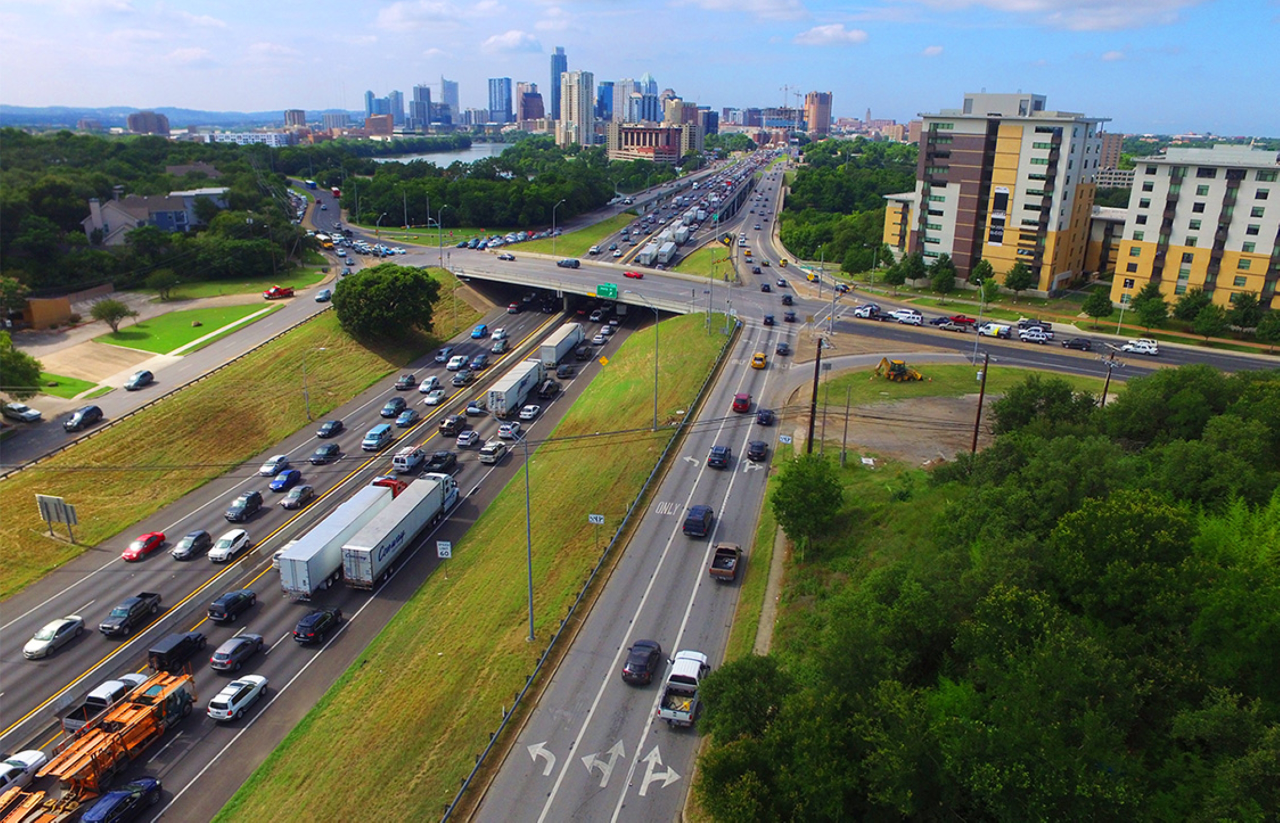
This level of growth and success also means more traffic on I-35. Nineteen of the top 100 most congested roadway segments in the state are along the I-35 corridor, and TxDOT has been working to address those issues. Since 2015, there have been 111 highway projects completed, with a total investment of $7.1 billion.
“Our seven TxDOT districts (along the I-35 corridor) continue to work together and are committed to strategically delivering needed transportation improvement, effectively and efficiently,” Johnson said. “Since March of last year, TxDOT has completed construction on $2.75 billion of highway projects on I-35.”
What’s more, TxDOT has issued an additional $837 million in new projects that are currently under construction.
“The purpose of the I-35 initiative is to develop a coordinated strategic plan among the seven TxDOT districts to address one of the most significant corridors from the state, national, and international standpoint,” Johnson said. “TxDOT remains more focused than ever on developing funding and constructing projects that will enhance the safety and efficiency of the I-35 corridor.”
By: TxDOT