
By now, you’ve probably heard about ExxonMobil’s proposed Baytown low-carbon hydrogen project. What you might not know about is their side gig: low-carbon ammonia.
So, what is ammonia?
Ammonia (NH₃) is a fascinating compound made up of nitrogen and hydrogen. It’s versatile and wears a lot of hats. You might associate it with household cleaning products, but its uses go way beyond that. Ammonia is super important for farmers because it’s a key ingredient in fertilizers that help grow our food.
It can also be used as fuel to generate electricity and power the transportation industry, with no CO2 emissions at the point of use.
But that’s not all. It also serves as a great hydrogen carrier with one very important caveat: it’s much easier to transport than hydrogen. While hydrogen requires extremely low temperatures or high pressures to be stored as a liquid, ammonia can be stored and transported at more manageable conditions, making it easier to export.
What is low-carbon ammonia?
Put simply, it’s ammonia produced with fewer emissions. The type of low-carbon ammonia they plan to produce is called blue ammonia, which involves capturing and storing CO2 emissions when we make it. Blue ammonia allows us to reap the benefits of ammonia while also reducing emissions associated with its production.
Their Baytown project
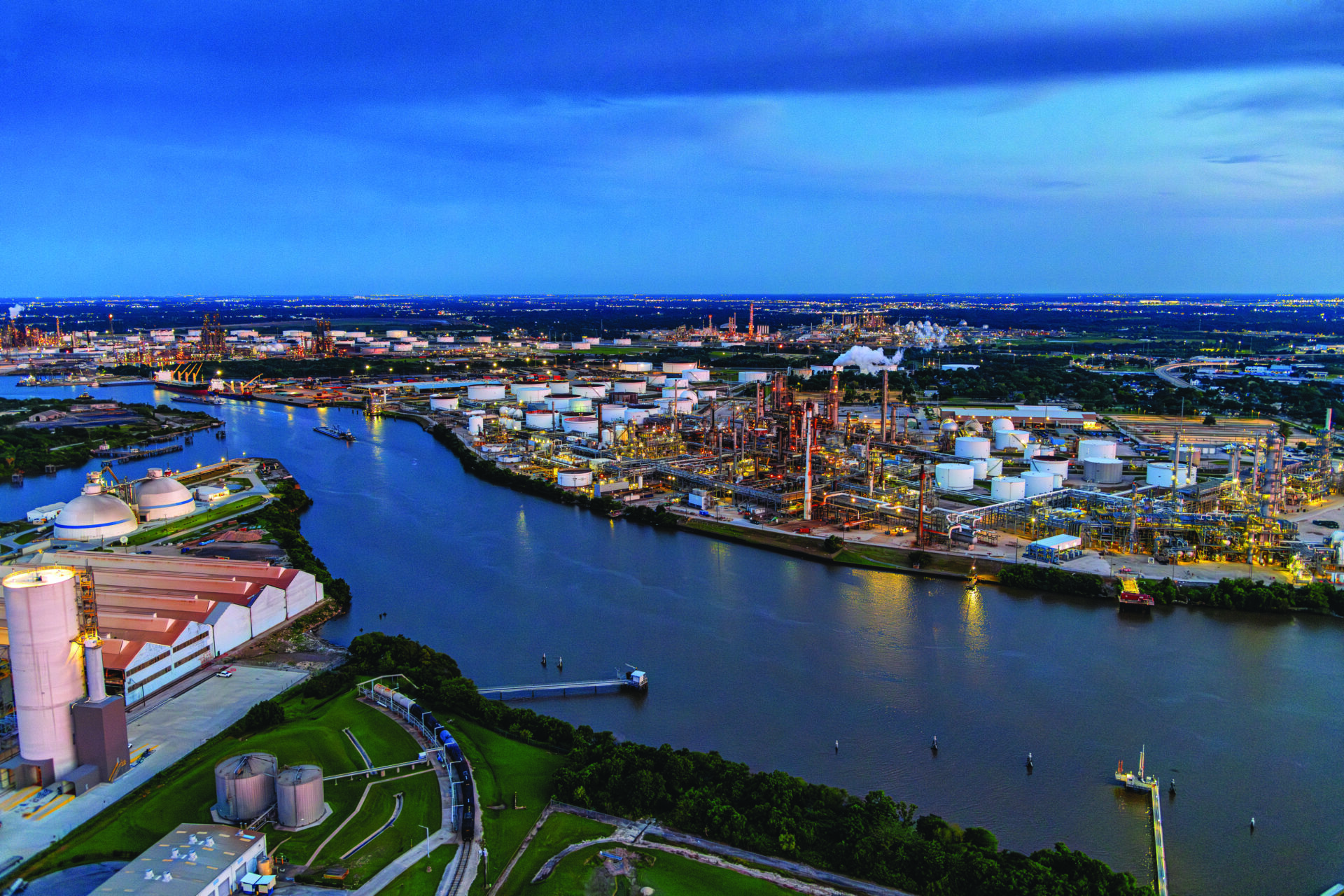
Expected to be the world’s largest upon startup, their proposed Baytown Blue Hydrogen and Ammonia project is gearing up to produce up to 1 billion cubic feet of low-carbon hydrogen per day and more than 1 million tons of low-carbon ammonia annually.
By scaling up production in the US, they expect to drive economic growth, create jobs, and strengthen the U.S. energy industry.
This isn’t just any low-carbon hydrogen and ammonia
They start with their differentiated natural gas (DNG) as feedstock. DNG is natural gas they produce in places like the Permian Basin where they are significantly lowering emissions from our operations.
When their DNG is transformed into hydrogen and ammonia, advanced carbon capture and storage (CCS) technologies will trap approximately 98% of the associated CO2 emissions.
Real-world progress
Just this week, they announced an agreement with Japan’s Marubeni to supply them with 250,000 tons per year of our low-carbon ammonia. They’re providing the ammonia to the Kobe Power Plant to co-fire with existing fuel, reducing CO2 emissions.
And earlier this year, they announced their plans with Europe-based Trammo to supply 300,000 to 500,000 tonnes of our low-carbon ammonia annually on a long-term basis.
Why it matters
Blue ammonia is key to reducing emissions, and their Baytown project could be a major player.
Their work to produce low-carbon ammonia aims to drive innovation across multiple industries and support a lower-carbon future.
Source: ExxonMobil (Edited by Subcontractors USA)