

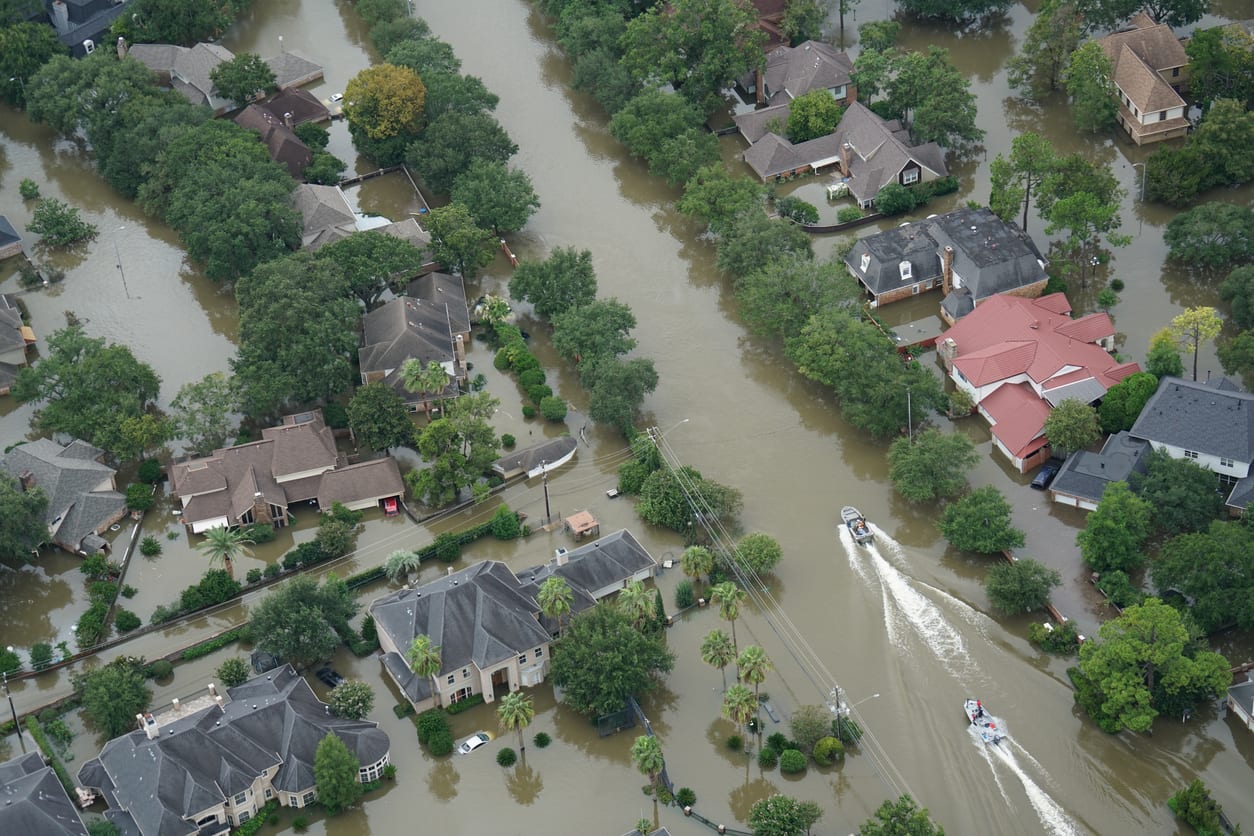
In an attempt to take action following Hurricane Harvey, the City of Houston has taken an aggressive, accelerated and largely emotional response by adopting onerous building and drainage regulation changes that went into effect on September 1.
In April, city council passed revisions to Chapter 19, the City’s Floodplain Ordinance, which dramatically increase regulations on building within the 100 and 500 year floodplains, including requiring new homes to be built to the 500 year flood elevation plus two feet.
Despite extensive efforts from the GHBA and our leadership, including meeting with every council member, Mayor Turner and his administration, testifying during committee hearings and at public council sessions, the mayor’s ordinance revisions passed with a vote of 9 to 7. We were one vote shy of this not passing as an 8-8 vote would have defeated the measure.
In addition to the changes to Chapter 19, the mayor directed Chief Resilience Officer Steve Costello to review Chapters 9 and 13 of the Infrastructure Design Manual (IDM) that govern stormwater infrastructure design and quality. To conduct this review, Costello formed a taskforce of roughly 50 people including a GHBA representative and some industry stakeholders, along with neighbor groups, green proponents and non-development interests.
In July, the taskforce put forward a list of recommendations for Public Works to consider. Unlike the changes to Chapter 19, changes to the IDM do not require city council action. The administration wanted these changes adopted at the same time as Chapter 19—September 1, 2018—to coincide with the anniversary of Harvey.
While Public Works and the Houston Permitting Center are still trying to determine how exactly they will implement all of these changes in such a compressed time period, they have realized that some of these proposals require more study and have pushed them to the normal review process.
We expect that there will be growing pains for City of Houston staff for the coming months. They simply don’t know what they don’t know yet. That will and has already resulted in longer permitting times, plan review times and project issues.
When you run into problems, we suggest that you meet with department staff to help them work through the issue. Reviewing projects case by case is not viable long term, but in the short term it may help speed up permitting times.
What do we know?
If you submitted plans prior to September 1 and they were deemed administratively complete, then they fall under the old regulations. Plans submitted after September 1 or that were not administratively complete would fall under the new regulations.
Plans are considered administratively complete when HPC is in receipt of all required drawings, documents, worksheets and forms as outlined on the Residential Prerequisite Checklist.
Chapter 19
In summary, the new floodplain development regulation changes require that:
- The 100 year floodplain will be regulated at the 500 year base flood elevation (BFE), plus two feet;
- The 500 year floodplain will be regulated at the 500 year BFE, plus two feet;
- Net fill will not be allowed in the 500 year floodplain (it is already prohibited in the 100 year), unless a property owner can demonstrate no impact to existing sheetflow;
- Additions larger than 1/3 of an existing footprint in the 500 year floodplain must be raised to the 500 BFE, plus two feet.
Public Works has put together a guidelines document to help with the transition; it can be found at houstonrecovers.org/chapter19/.
Chapters 9 & 13
- Lots 15,000 square feet or smaller with impervious cover less than or equal to 65% are exempt from detention requirements.
- Eliminate the detention credit for impervious cover, but clarified the changes focus on requiring detention for disturbed area resulting in impervious cover. This change will focus requirements for detention on proposed improvements rather than existing development that will remain unchanged.
- Accommodations for natural drainage patterns, i.e. if the natural drainage is front to back, you will not be required to drain back to front.
- Require an engineered grading plan for more than 1,000 cubic yards of fill, this is down from the previous 5,000 cubic yard threshold.
Learn more about the requirements for Chapters 9 and 13 at houstonrecovers.org/designstandards/.