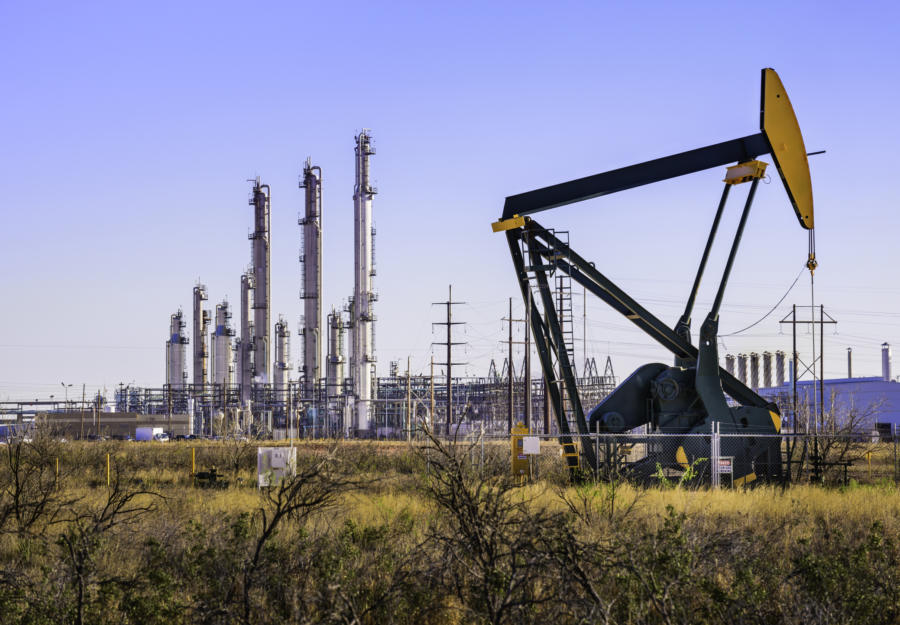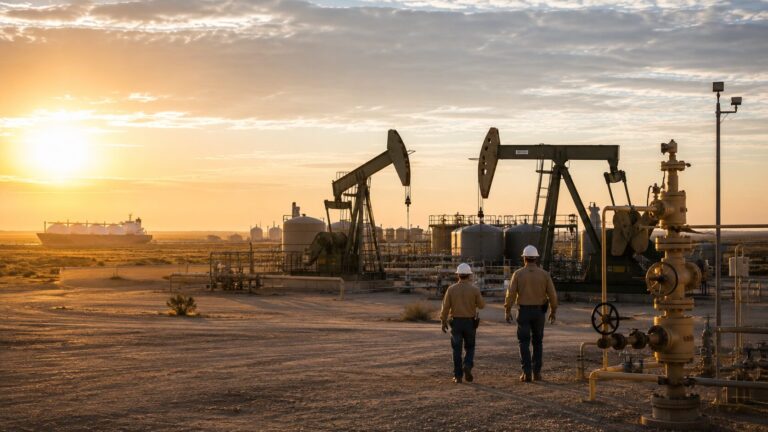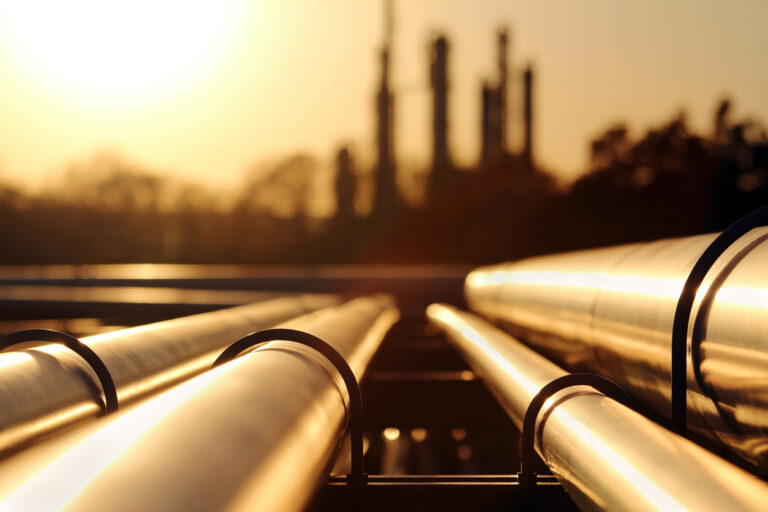

Few industries can match the rapid rise of technology and innovation of the Texas oil and natural gas industry. From the state’s first gushers to modern day hydraulic fracturing, a relentlessly pioneering spirit has been the driving force for the industry that has defined Texas. Over the decades, as technology evolved, game-changing innovations gleaned from the industry’s commitment to research and development have revolutionized not only energy, but life as we know it.
Not only have industry’s advancements propelled humankind, they have resulted in lower-emissions operations, services and products. The combination of hydraulic fracturing and horizontal drilling, perfected right here in Texas, has led to America leading the world not only in production of oil and natural gas, but in reduction of greenhouse gas emissions. Indeed, greater use of clean natural gas has driven U.S. carbon emissions to their lowest levels in a generation. Advancements in fracking have also saved Texas families hundreds of dollars in energy costs, led to a revival of manufacturing and high-tech jobs in Texas, and provided billions in funding for our state’s public schools and universities, roads, first responders, and other essential services.
As the world has transformed over the decades, the energy industry’s creativity, best practices and unmatched investments have produced state-of-the-art operations. The industry has embraced digitalization and new technologies, such as data analytics, cloud computing, digital oil field, robotics, automation, Artificial Intelligence, virtual reality, 3-D imaging and modeling, and more. Oil and natural gas companies are also pioneering breakthrough technologies to capture, store and reuse carbon dioxide and investing in advanced technologies like optical gas imaging cameras and drones to detect leaks.
The industry is always inventing. A Texas oil and natural gas company is engineering the world’s largest direct air capture (DAC) and sequestration facility, located in the Permian Basin, that removes carbon dioxide (CO2) directly from the atmosphere. Captured CO2 can be used in enhanced oil recovery, a process where CO2 is used to free trapped oil and then safely stored underground permanently.
Management of produced water, including the acquisition and recycling and reusing of produced water, has evolved dramatically. Today, water from exploration and production activities is being safely recycled for use beyond the oil fields for things like irrigation, construction, and industrial purposes.
In the midstream sector, pipelines are smarter and safer than ever before – making them the safest and most reliable method of transporting oil, natural gas and fuel. Precision in engineering, construction, and operations, 24/7 monitoring and use of high-tech inspection tools like inline smart pigs ensure the integrity of the pipe to safely and reliably transport products.
Our cars, SUVs, trucks, and buses are 98-99% cleaner now than they were 50 years ago thanks to the industry’s investment of billions of dollars in research, modernized refining practices, and the development of cleaner and improved fuels. In fact, no one is investing more in low-carbon technology than the U.S. oil and natural industry.
Innovations and technological advancements like these are truly making a difference by elevating communities, improving quality of life and building economies at home and around the world. Whether it is increased agricultural productivity, economic growth, longer life spans, higher quality and more accessible health care, communication, computers, and mobility – just to name a few – some of the most impactful technological advancements and breakthroughs in modern history can trace their roots to the Texas energy industry. For 100 years, the Texas oil and natural gas industry has led the way, and we can rest assured knowing the innovations that have had such a profound imprint on modern life will only multiply as the industry builds a future that is smarter and cleaner still.
Source: Texas Oil and Gas Association