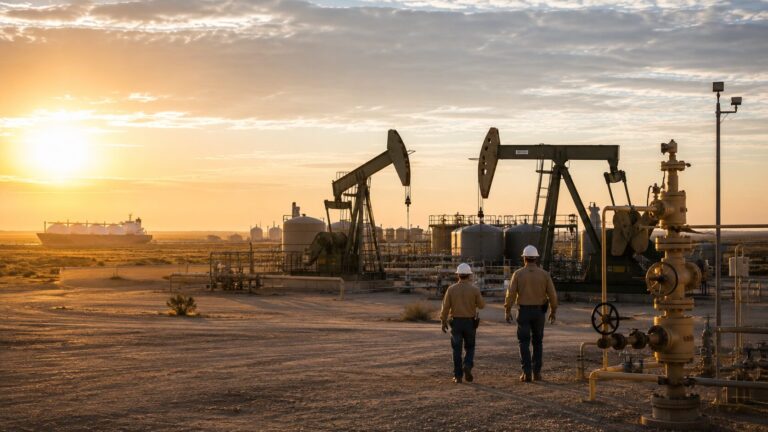

The importance of the midstream sector of the Texas oil and natural gas industry and its role in connecting record production of oil and natural gas to the downstream advances in refining and liquefaction technologies was examined today at the kickoff symposium for the newly created Lamar University Center for Midstream Management & Science.
The Symposium brought together the midstream industry and its suppliers, governmental representatives, regulators and academia to discuss the latest trends, developments and advancements in the midstream sector, identify opportunities and gaps, and learn from one another. Attendees heard from officials from across the Texas oil and natural gas industry and midstream sector, as well as Texas government leaders. Featured speakers included Dr. Ken Evans, President of Lamar University, Dr. Brian Craig, Dean of the Lamar University College of Engineering, Todd Staples, President of the Texas Oil & Gas Association, Thomas Long, Group Chief Financial Officer of Energy Transfer, Jim Nyquist, Group President of Emerson Automation Solutions, State Senator Robert Nichols, and State Representative Dennis Paul.
“The research, development and problem-solving efforts generated within institutions of higher learning has rooted our nation in strength and security. This creative thinking has resulted in innumerable outcomes making lives better, and TXOGA members appreciate the opportunity to partner with the Lamar University Center for Midstream Management and Science to continue to develop innovative solutions in the midstream sector of the oil and natural gas industry that will ensure a cleaner, stronger energy future for Texas and around the globe,” said Staples.
“Texas is the nation’s top producer of oil and natural gas and the midstream sector is a critical player in our state’s continued energy achievements,” said Dr. Craig. “This Center was established to grow an industry-university collaboration that advances midstream capacity, resiliency, environmental compliance, and safety. The solutions and knowledge the Center will develop can then be broadly distributed to the industry, workforce, policymakers, students and scholars, improving energy independence and security for Texas and our entire nation.”
“Texas is the nation’s largest oil and natural gas producer, home to more pipeline miles than any other state, and has 30% of the nation’s refining capacity, and this Center is an integral part of moving forward, ensuring this industry is capable of responding to the needs of our massive upstream and downstream sectors,” said Senator Nichols, a graduate of Lamar University. “This Center is needed for Texas, for the country, for the world, and I’m proud that it is housed at my alma mater.”
“With so much oil and natural gas coming out of our producing fields, we have to be able to get the product across the state to refineries and ports,” said Representative Paul. “Advancing, improving and expanding our state’s energy infrastructure through collaborations like the Center is the best way to secure our economy and increase energy security.”
Established in the fall of 2019, the Center was created and funded by the 86th Texas Legislature to establish and grow a cross discipline industry and university partnership to provide value added midstream industry education, professional development, upskilling and research solutions. The Center’s emphasis is on midstream research and education and supporting students, faculty members, labs, and post-doctoral fellowships across Lamar University with an emphasis on applied research that is valuable to the midstream industry, including the development of academic courses and certificate programs at Lamar University to train the next generation of midstream professionals. The Center will focus on the areas of improved efficiency and optimization, reliability, resilience, inspection and maintenance, security, data analytics and decision making, digital transformation, environmental compliance, and safety.
Source: Texas Oil and Gas Association