
Texans’ work ethic, entrepreneurial spirit and our willingness to take on big ideas explain why this state has become the country’s economic engine.
That’s why I’m so bullish about the new high-speed train that will connect North Texas and Houston, the state’s largest commercial hubs. The project is a perfect example of how Texas entrepreneurs approach challenges and opportunities: creatively, optimistically and collaboratively, using a business plan driven by free market principles.
Having served as Texas’ secretary of state, mayor of the great city of Dallas and, in my role as the US Trade Representative, the nation’s chief trade negotiator and a principal adviser to the president, I have spent my career encouraging efforts that support economic growth.
The bullet train accomplishes that and more, creating a super economy of approximately half the state’s population. And, the project creates jobs in places that need them, providing a steady flow of tax dollars to local communities and schools and ushering in a new high-tech industry to Texas.
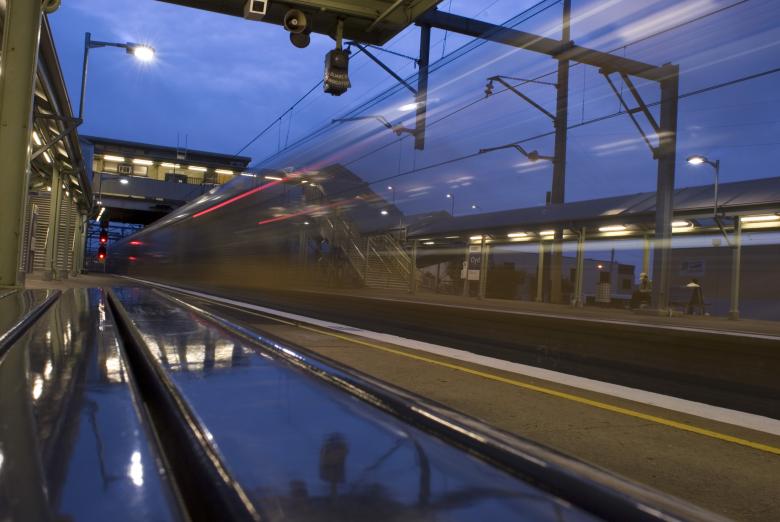
 As a reminder, it does this while giving riders a speedy, 90-minute travel option between the two metro areas (with a stop in the Brazos Valley), instead of facing traffic-choked highways or the hassles of air travel. Best of all, it’s being developed by enthusiastic, visionary investors — not through government grants.
Texas is a land of Big Ideas, and this is the latest example of a forward-thinking approach that will benefit generations. I know firsthand how the right vision at the right time can shift perceptions from awareness to action.
In North Texas, early advocates for mass transit faced challenges but now we have a thriving light rail system in DART. American Airlines Center transformed a former hazardous waste site into a popular downtown destination.
The bullet train will create a new industry that will prove the viability of high-speed train service in America, seeding the domestic manufacturing industry for future deployments across the country –all based here in Texas.
As Business columnist Mitchell Schnurman recently wrote in The Dallas Morning News:
“As a transit option, a Texas bullet train would be a major breakthrough. As an economic development project, it would be off the charts. That’s because taxpayers don’t have to cough up anything to make it happen. That’s almost unheard of — not only for giant investments but even for small ones.”
So why has legislation been introduced in Austin trying to undermine construction of the 240-mile line?
These bills would kill the benefits the project will bring to Texans whose products and services are sold in Texas to construction and related industries. Think about the economic development the project will generate around the passenger stations in Dallas, the Brazos Valley and Houston. Even those who moved outside the cities for their love of the rural lifestyle can stay put with new jobs and opportunities from the high-speed train.
The need for a project of this magnitude is clear. It will pump $36 billion into the Texas economy over 25 years, and the project’s developer, Texas Central, will be paying $2.5 billion in taxes to the state, counties, cities, schools and other entities over that period.
The project will create 10,000 direct jobs during each year of construction, with nearly 1,000 permanent, highly trained positions once operational.
And it will save lives – being the safest way to travel as traffic accidents continue to rise. Traffic congestion along Interstate 45 between North Texas and Houston already is a major problem, and publicly funded infrastructure expansion is not going to be enough to keep up with the state’s growth.
The populations in the Houston and North Texas regions are expected to double over the next 20 years. Along the route, four counties already have air quality non-attainment status. As this project relieves congestion and pulls cars off the road, its electric-powered trains will provide a cleaner alternative that will help contribute to better air quality over time.
Simply put, what we need to flourish and prosper is more trains, not more lanes. So let’s keep Texas moving, in urban and rural communities, thanks to a high-speed train that will bring jobs and economic growth now and for generations to come.
Ron Kirk is a former mayor of Dallas and U.S. trade representative and a senior adviser to Texas Central.