
-
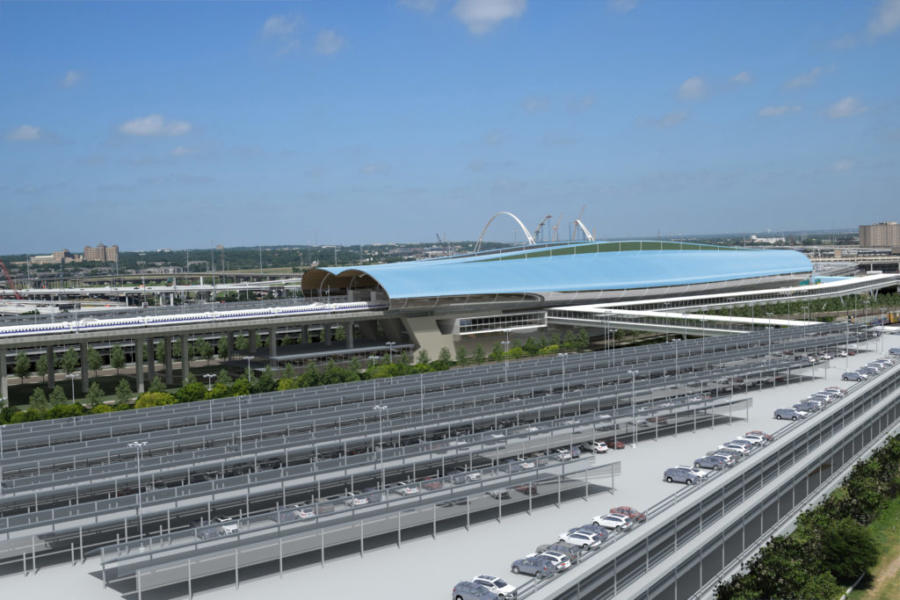
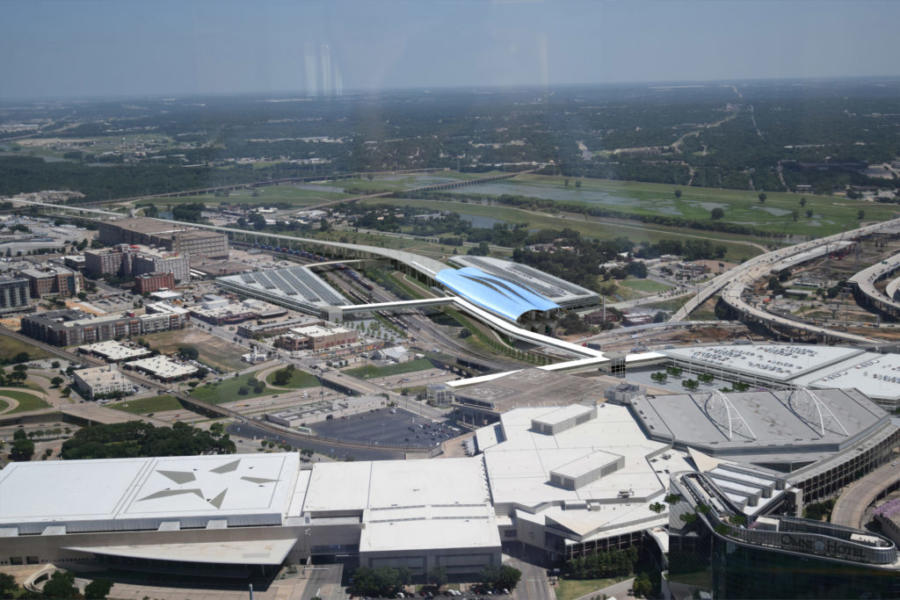
Maps, renderings show terminal near convention center in Cedars neighborhood
-
Bullet train project seen as catalyst for economic growth, new jobs and development
-
Station expected to increase property values, generate more local tax revenue
DALLAS [Jan. 29, 2018] – Developers of the Texas Bullet Train unveiled new details today on its passenger station in Dallas, giving riders quick and comfortable access for their in-state travels instead of being stuck on traffic-clogged roads.
Texas Central said the terminal will be built on a largely vacant 60-acre plot south of the Kay Bailey Hutchison Convention Center in the revitalized Cedars neighborhood, near the Interstate 30 and Interstate 35 interchange. The area is undergoing a remarkable transition from mostly light industrial and manufacturing facilities to a walkable neighborhood, featuring repurposed and new-build mixed-use developments.
The announcement comes a month after federal regulators overseeing the project said in an environment analysis that the 200-mph, North Texas-to-Houston train would “alleviate the strain” on the state’s infrastructure and “is needed to accommodate growing demand.”
From the Dallas station, passengers will have a 90-minute connection to the Greater Houston region, along with a midway stop in the Brazos Valley. Plans call for connecting the local station to multimodal transportation networks, including DART services.
The introduction of the Texas Bullet Train to the Cedars will accelerate and enhance economic growth in the southern edge of downtown, including office, retail, entertainment, restaurants, hotels, apartments and condominiums.
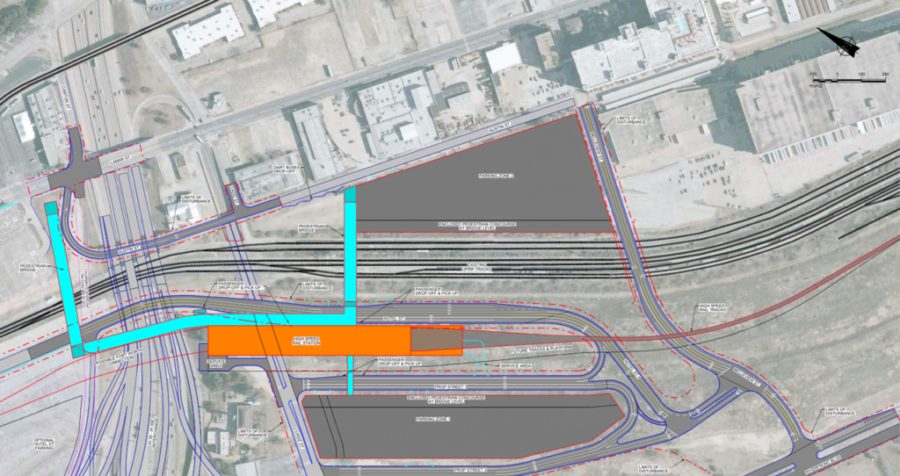
Texas Central released maps and conceptual renderings – final designs are pending – that show a sleek multi-level station between South Riverfront Boulevard and Austin Street, built to link with nearby roadways and other forms of transportation. That includes proposed traveler-friendly connections with DART’s light-rail system, buses and other transit systems.
“This station will be a magnet for economic activity in an area ripe for development. And it will connect seamlessly with local roads and public transit,” said Texas Central CEO Carlos Aguilar.
As North Texas’ population continues to soar, this project also will attract new residents to the area, encouraging the densification of the Cedars neighborhood and aiding the region’s highway congestion relief efforts.
The development would be comparable to the recent transition of the Uptown area of Dallas, the Federal Railroad Administration’s (FRA) said in its Draft Environmental Impact Survey (DEIS).
The Texas Bullet Train would bridge the two largest cities – and half of the state’s population. Last month, the FRA identified the train’s preferred route, mostly following transmission lines in a utility corridor between North Texas and Houston, with the Brazos Valley stop serving Bryan-College Station, Texas A&M University and others.
The federal report provides additional guidance as the project moves into its preconstruction phases, ensuring the safety and environmental wellbeing of counties and communities along the 240-mile route.
Aguilar said the Texas Bullet Train also is a draw for Amazon’s new headquarters, providing easy access to the urban, suburban and rural parts of the state, and puts highly ranked research facilities within a train ride away.
“This creates a super economy. It’s an amazing way to accelerate transit-oriented development that sets Texas apart from any other state, and provides businesses with unparalleled access to workers, suppliers and other critical needs,” he said.
Federal regulators, in the environmental report, cited the Dallas station’s many economic benefits, including an increase property values within a half-mile of the terminal as a result of the train project. That’s in addition to new and related transit-oriented development in the area.
Also, the DEIS said the station and its support facilities would generate more revenue for property-taxing entities, and station ticket sales would produce more in local sales taxes.
“The impact to property tax revenue would be beneficial for all local jurisdictions,” the FRA said. “These additional resources would benefit schools, libraries, parks, municipal utilities, hospitals and emergency services that are funded through property taxes.”
Texas Central, an investor-owned project, is not taking federal or state grants for construction or its operations. It has reached an agreement with developer Jack Matthews, who owns the site picked for the proposed terminal.
The DEIS said construction of the high-speed train station could boost The Cedars neighborhood and potentially “increase land use densities” near the terminal and encourage transit-oriented development in downtown Dallas, “which would be consistent with local plans and policies.”
“It’s no surprise that this area is ideal for the bullet train station and the many benefits it will bring,” said Phillip Robinson, president of the Cedars Neighborhood Association. – 2 – ‘Location is everything, and the southern sector of Dallas continues to be one of the hottest spots for the city’s growth.”
“The station is sure to help local establishments, continue our organic growth and support our cultural amenities. We are very excited to be part of such an amazing project,” Robinson said.
The Cedars neighborhood already has seen a burst of new buildings and conversion projects, including Southside on Lamar, the Dallas police headquarters, restoration of historic industrial buildings to mixed-use facilities and the opening of a movie theater, Alamo Drafthouse Cedars, and a boutique hotel, NYLO Dallas South Side.
“Construction of the [high-speed train] station would result in the short-term acceleration of new development’’ along with other activity to support the needs of the train’s riders, the DEIS said.
The Railroad will create 10,000 jobs during each year of construction and about 1,500 fulltime jobs when operations start.
According to the DEIS, the Dallas station concourses would consist of public areas, such as restaurants, bars, seating areas, fast foods, concessions, newsstands and rental car counters.
Enclosed, elevated pedestrian bridges would connect it to new parking facilities. The bridges may be extended to provide easy access to public transit, such as DART’s nearby stations at the convention center and Union Station, and an extension of the Trinity Railway Express commuter line from Union Station to the bullet train terminal, the DEIS report said.
Improvements also would be planned for Riverfront Boulevard at Cadiz Street, Riverfront Boulevard at Corinth Street, Belleview Street at South Akard Street and Hotel Street north of I-30, along with an extension south along the station area. These would be designed in part to alleviate current congestion and improve traffic flow.
ABOUT TEXAS CENTRAL
Texas Central is developing a new high-speed train that will connect North Texas, the Brazos Valley and Houston, using proven, world-class technology. The 90-minute trip will provide a safe, reliable and productive transportation alternative. The company’s market-led approach is backed by investors, not government grants, a new business model for infrastructure advances. Texas Central and its affiliated entities will be responsible for the system’s design, finance, construction, operation and maintenance.
MEDIA INQUIRIES
For more information, please visit www.texascentral.com or contact:
Kate Heckenkemper
Hill+Knowlton Strategies
Kate.heckenkemper@hkstrategies.com