
AUSTIN — Texas felt a moment of awe in the early afternoon hours on April 8 as traffic was free-flowing in metro areas across the state.
Between 1:30-2 p.m. a total solar eclipse crossed a large portion of Texas. TxDOT expected up to a million people to travel to see it, impacting traffic in the hours after the eclipse. Despite some areas seeing backups, much of the state had less-than-normal congestion.
While seeing a once-in-a-lifetime total eclipse was an awe-inspiring and humbling experience, after months of planning and preparing for a major increase in traffic, the sight of traffic flowing freely was also incredible, turning into a debate inside TxDOT’s emergency operations center in Austin as to what got a bigger reaction, the eclipse or traffic maps.
“I want to thank our crews and state partners for their hard work leading up to this eclipse,” said Emergency Operations Director Matthew Heinze. “Thanks to our planning and preparation, the help of Texas drivers, and some cloudy skies, traffic impacts were mitigated across the state.”
Heinze said the weather likely reduced the number of visitors as people changed plans to get the best viewing opportunity.
TxDOT’s extensive planning also contributed to minimal traffic impacts. Some of the preparations included pausing construction work and lane closures, 24/7 emergency center operations, highway signs telling drivers not to park on the side of the road, and crews patrolling roadways in the areas of totality.
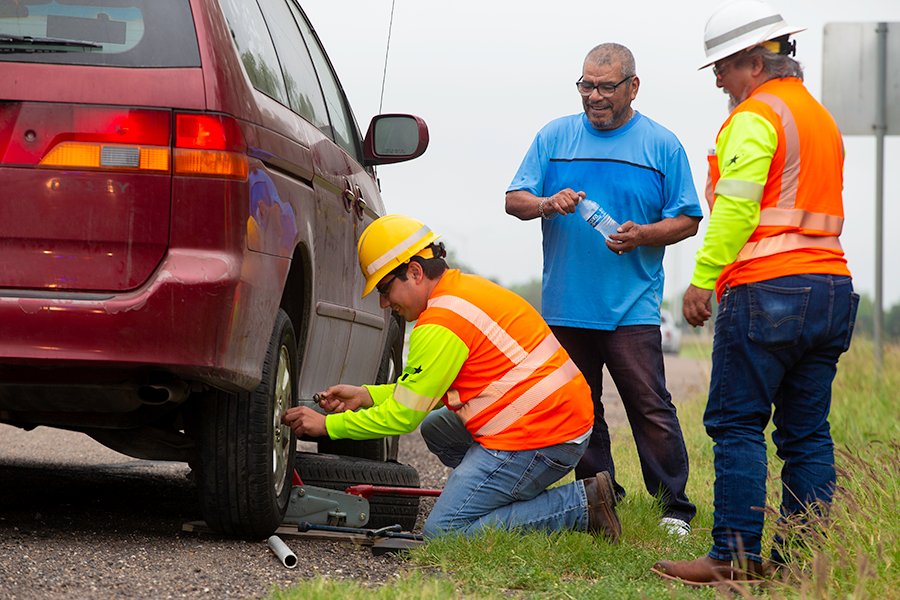
Many of these crews went above and beyond, assist stranded motorists, directing traffic after crashes, changing tires, assisting stranded motorists and helping in medical emergencies.
One crew on SH 289 south of Gunter, Texas, came across a vehicle flashing its hazard lights. After stopping to check on the driver, they found a person having a medical emergency. The crew called 911, stayed with them until help arrived and controlled traffic as they were taken to the ambulance.
“It’s really great to see our crews going the extra mile to help people on the side of the road,” Heinze said.
Communication and coordination also helped the flow of traffic. Monitors showing traffic cameras and traffic maps lined the walls of TxDOT’s EOC in Austin. Inside the room, people could communicate with local areas and other state agencies to respond to crashes and increases in traffic or other incidents.
“Is it rolled over or jack-knifed?” said one person in the EOC after seeing a stalled 18-wheeler on I-35. The 18-wheeler cab wasn’t visible on the camera, but it was not rolled over, minimizing clearing efforts.
TxDOT’s social media channels and the news media also helped prepare drivers for the day of the eclipse with messages of planning for extra traffic, being patient, checking drivetexas.org and finding a safe place to park. For the most part, drivers seemed to heed these messages and many people had positive reactions online.
“@TxDOT has done a great job with the freeways. Almost unnoticeable. Small Texas towns, with one or two stoplights got backed up but it’s not bad. Really good to stop and grab some BBQ at Woodys in Centerville, TX!” said one Facebook comment.
TxDOT officials said preparation was the name of the game for this eclipse, especially since the time and location was known well in advance.
By: TxDOT