
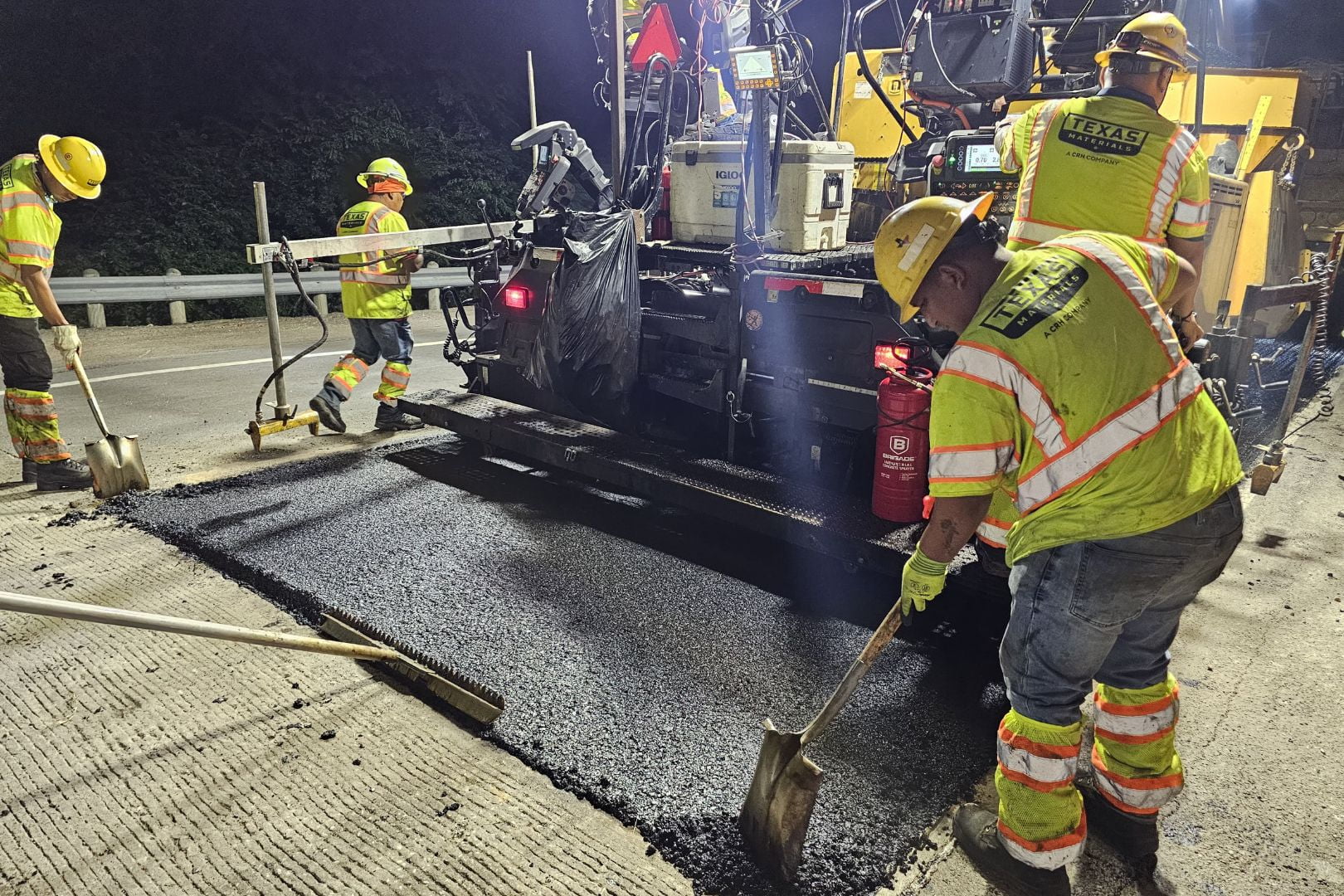
If you’re driving through Rockwall, you’d never guess the road beneath your tires is made with plastic—literally.
In a first for Texas, Sahadat Hossain, director of the Solid Waste Institute for Sustainability and a professor of civil engineering at The University of Texas at Arlington, has partnered with the Texas Department of Transportation’s Dallas district to pave a stretch of highway using his innovative plastic-infused asphalt.
“We are not only building roads; we are building a cleaner future,” Dr. Hossain said. “This project demonstrates how engineering innovation can help address one of the world’s biggest environmental challenges.”
That challenge: reducing the planet’s mounting plastic waste.
Since 2019, Hossain and TxDOT have conducted a feasibility study on reusing plastic waste in asphalt pavement. In May, they implemented the concept by constructing a 3,500-foot stretch of plastic-infused roadway along SH 205 in Rockwall. The asphalt blend combines traditional bitumen—one of asphalt’s key ingredients—with shredded plastic waste.
As more roads suffer from potholes and cracks under extreme heat or flooding, plastic-infused pavement offers a timely, climate-resilient solution for building sustainable infrastructure.
“This is a great example of the kind of sustainable infrastructure project Dr. Hossain and TxDOT are collaborating on—one that can really make an impact on the future and drive a more sustainable future,” said Brian R. Barth, deputy executive director at TxDOT. “This is taking one problem, which is plastic filling up our landfills, and using it to solve another problem by providing longer-lasting roads.”
Hossain has dedicated his career to using recycled plastic in civil engineering infrastructure to help solve the global waste crisis. Plastic waste is notoriously challenging to manage: It doesn’t biodegrade but instead accumulates over time in landfills and oceans, where it can damage marine ecosystems, contaminate soil and groundwater, and pose health risks to humans.
His team now plans to monitor the Rockwall roadway over the coming years, comparing its durability and performance to that of traditional asphalt. Researchers will track signs of wear and tear, including cracks, potholes and surface irregularities.
If it proves successful, the Rockwall pilot could lead to widespread adoption of plastic roads across Texas and beyond, offering a promising solution for reusing the millions of tons of plastic waste generated each year.
This milestone is the result of years of research, development, and field testing. In 2023, Hossain’s team incorporated plastic-infused pavement into two UTA parking lots and infrastructure in his home country of Bangladesh. These test roads, based on ongoing performance evaluations, are holding up well.
The project also gives UTA students the chance to gain hands-on experience with cutting-edge research and technology.
“This project brought together sustainability, innovation and practical application in a unique way,” doctoral student Ishraq Faruk said. “Watching years of our laboratory research evolve into successful field implementation, with the potential to reduce plastic waste and improve pavement performance, has been both exciting and deeply meaningful.”
Source: UT-Arlington