
By Subcontractors USA News Provider
A recent report by the CDC identified over 600,000 COVID-19 cases in Texas and more than six million confirmed cases nationwide. Therefore, measures to mitigate disease transmission remain critical to slow the spread. In construction, oil and gas, manufacturing, and other related industries, there are special and unique measures necessary to keep workplaces and the workforce safe and productive during these challenging times.
Control recommendations to reduce the risk of spreading COVID-19 must be enforced and compatible with any safety programs and personal protective equipment (PPE) normally required for the job assignments. Medical experts strongly recommend social distancing of at least six feet. But as construction tasks and sites can sometimes make social distancing impossible and face masks can become contaminated during a workday in the construction environment (even with replacement masks on site per OSHA’s recommendation), temperature checks are now a strong addition to mitigation procedures helping to keep employees safe.
The Food and Drug Administration (FDA) provides clear guidance on the benefits and proper use of thermal imaging systems. These systems have many benefits, but they must be suitable for the task and properly used to provide accurate readings.
When deciding which temperature screening system to choose, careful consideration should be taken not to choose a technology that has been rushed to market and quickly adapted to this application. The reputation and track record of the manufacturer are good indicators of the suitability and effectiveness of the product. AMETEK Land (LAND), for example, has more than 70 years of experience in non-contact temperature measurement innovation and has developed the VIRALERT 3 system. LAND, having developed human body temperature measurement equipment since 2002 and the original SARS epidemic, is trusted by the major global players in heavy industries including steel, glass, and oil and gas.
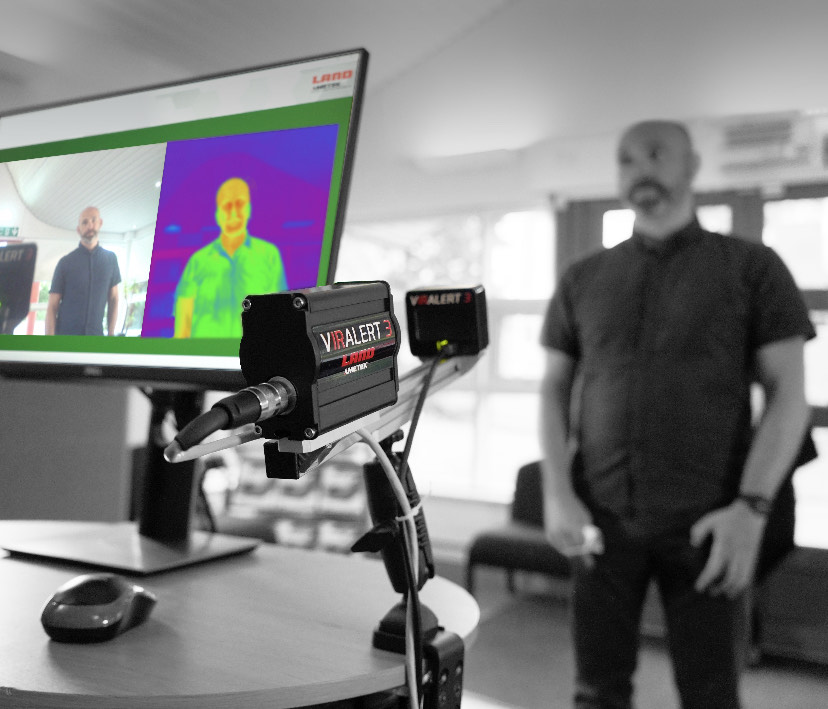
LAND patented ‘in-scene’ temperature calibration; pioneering the technology and techniques that have become the industry gold standard for accuracy. As the amount of energy radiated by the human body is relatively low and installations are often in conditions that are far from ideal, further consideration needs to be given to the design of system in order to give accurate and repeatable temperature measurement readings. A proven method, patented by LAND, to minimize the effects of the surrounding environment uses the integration of a black body heat source. A black body is a precision engineered component that provides a reference heat source to a very tight tolerance. This can be viewed in the same frame as the individual that is being measured. If the distance of the black body and the person measured are known, it is possible to ‘calibrate’ the measurement in real time, in non-ideal conditions, using a feedback loop and algorithm in the associated software. An important point to note here is that these distances are ‘known’ and understood. This means that a unit with an integrated black body at specified fixed distance removes potential errors in complicated software set-ups where the black body is a separate unit that can be mounted in different locations relative to the thermal imager.
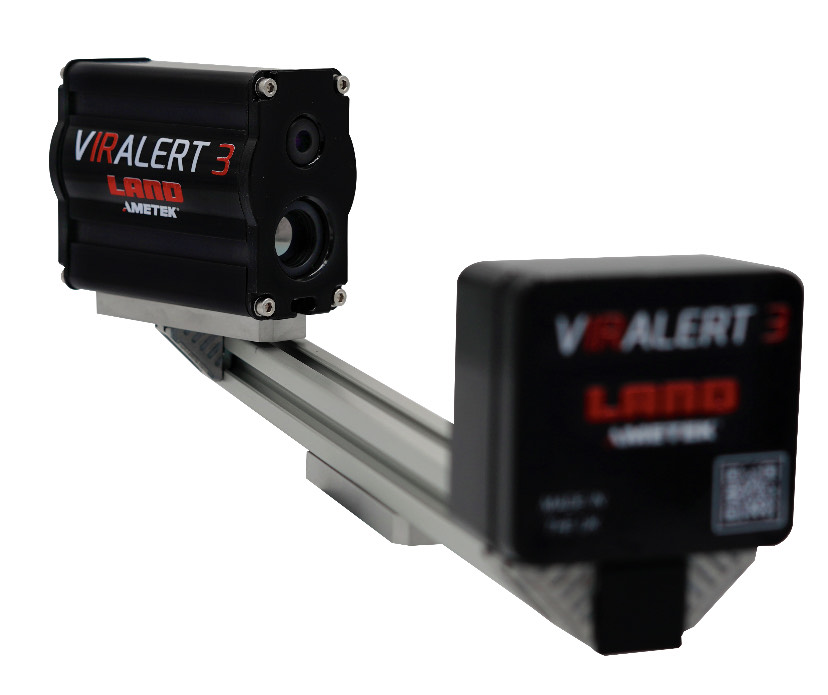
A non-contact system scans one person at a time from a distance of one to two meters, complying with social distancing rules. Not only is this safer, removing the risk of close contact screening, it is also quicker – taking less than two seconds per person – so high flows of personnel can be managed easily. The VIRALERT 3 has an excellent vertical field of view to cover a range of heights, and automatically locates a person’s face, which is the best place to detect elevated skin temperature.
Temperature screenings and health checks are not a replacement for other protective measures such as social distancing. Since an elevated temperature does not conclusively indicate a COVID-19 infection, further evaluation and diagnostic testing are needed to determine if someone may be contagious.
And though no temperature measurement system delivers 100% protection against the spread of COVID-19 or other infectious diseases, installing an accurate non-contact system at key entry points significantly reduces the risk to workers, enhancing the effectiveness of other safeguards to make sites safer. To find out more about non-contact temperature assessment and VIRALERT 3, visit www.landviralert.com.
Sources:
CDC
OSHA
FDA