CO2 Enhanced Oil Recovery could unlock a significant new source of U.S. oil production by recovering resources left behind in mature oil fields. A University of Houston report estimates that approximately 137 billion barrels could be technically recoverable using CO2-EOR, with Texas and the Gulf Coast positioned to play a major role in expanding production while supporting permanent carbon storage.
The solution to increasing U.S. oil production could be buried beneath existing oil fields, and a new University of Houston report suggests carbon dioxide may help retrieve it.
The UH Energy white paper, “Revitalization of Mature Oil Fields: Opportunities and Challenges of CO2-EOR,” was authored by Charles McConnell, executive director of UH’s Center for Carbon Management in Energy, and Zhiyuan Li, a UH petroleum engineering doctoral candidate. A PDF of the paper is available here.
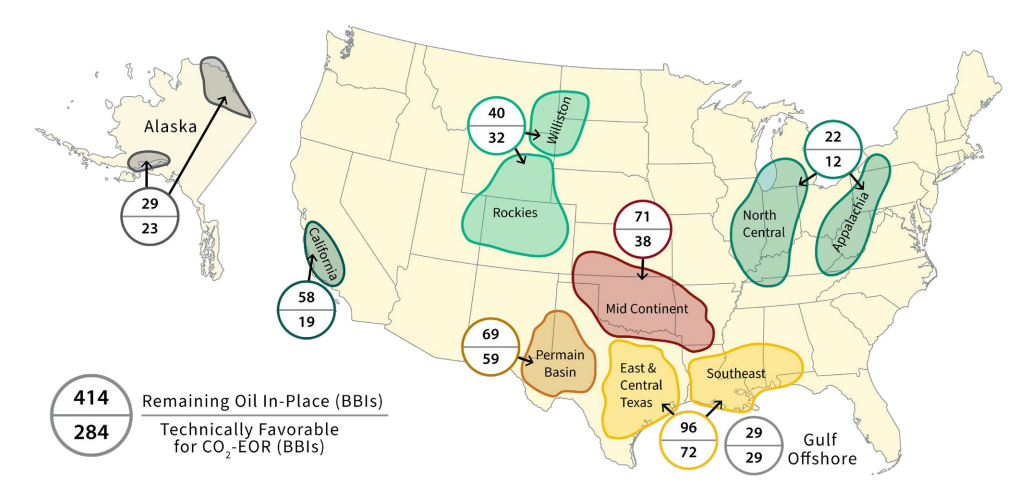
It examines the potential for carbon dioxide-enhanced oil recovery, or CO2-EOR, to tap vast amounts of oil left behind in existing U.S. fields while permanently storing carbon dioxide underground — potentially increasing U.S. energy supply while reducing carbon emissions. Of the estimated 624 billion barrels originally contained in conventional U.S. oil reservoirs, about 434 billion remain underground, including roughly 20 billion barrels of proven reserves.
“Injected CO2 works to revitalize mature oil fields by reducing oil viscosity, improving sweep efficiency and restoring reservoir pressure, resulting in incremental oil production beyond primary and secondary recovery,” according to the report. “CO2-EOR also supports permanent carbon storage and by virtue of this will produce uniquely low-carbon intensity oil for global markets.”
The report estimates 137 billion barrels could be technically recoverable through CO2-EOR, with Texas positioned to play a huge role. Texas and Gulf Coast regions, including offshore resources, contain more than half of the nation’s oil resources considered technically favorable for CO2-EOR, potentially positioning the region to lead redevelopment efforts.
But technical potential does not guarantee financial success.
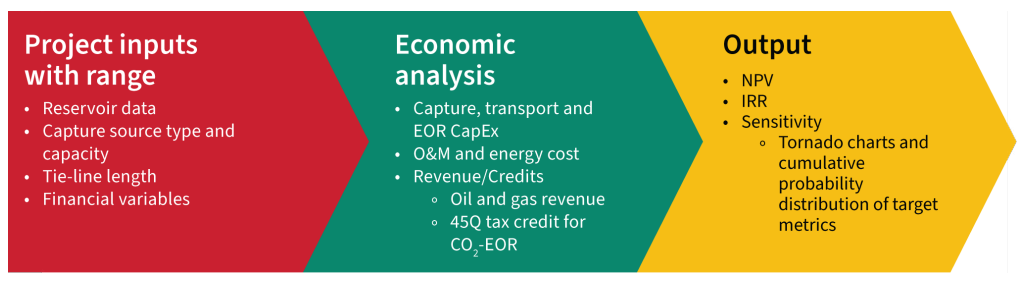
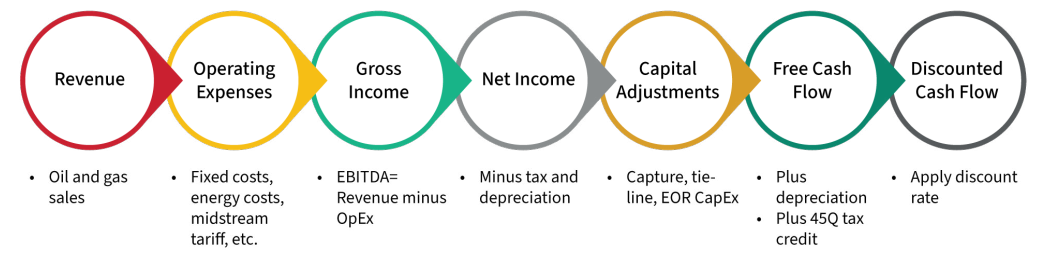
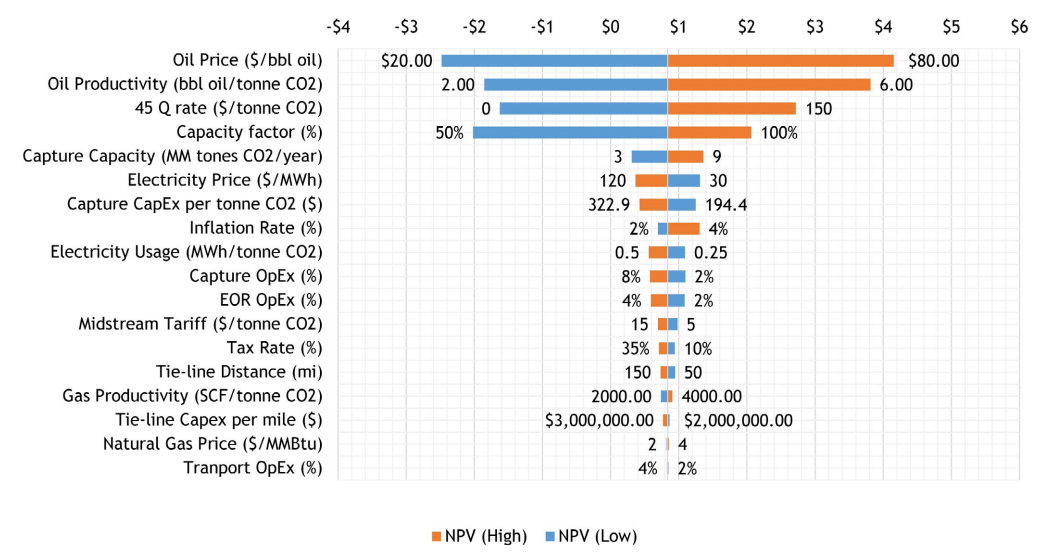
“The economic feasibility of a CO2-EOR project depends on the combined performance of all associated elements,” the report said, pointing to costs associated with carbon capture, transportation, field redevelopment, operations, monitoring and tax incentives.
Existing oil fields also present both advantages and challenges. Older wells may require inspection, repair or re-plugging to prevent injected CO2 from escaping, while operators must continue monitoring reservoirs throughout and after a project’s operating life. Existing infrastructure can be leveraged for enhanced project economics and implementation effectiveness.
The report concludes that mature fields with well-understood geology, existing infrastructure and reliable CO2 supplies could represent achievable near-term opportunities for expanding both enhanced oil recovery and carbon storage. Where deployed, EOR provides both a lower carbon intensity oil for global markets and a significant contribution to energy security.
The next major source of U.S. oil may not require discovering new fields. If the economics are right, CO2-EOR could help recover billions of barrels that were left behind the first time.
Key Takeaways
- Approximately 137 billion barrels of U.S. oil are technically recoverable using carbon dioxide-enhanced oil recovery (EOR).
- Texas and the Gulf Coast contain more than half of the nation’s oil resources considered technically favorable for this technology.
- Oil prices, production rates, capital investment and infrastructure strongly influence whether projects are economically viable.
- Existing wells — even those that have been abandoned — have significant additional oil in place that EOR can unlock. Existing infrastructure can make the economics compelling.
Source: UH Cullen College of Engineering