

Construction Personal Protective Equipment for the Female Workforce

iStock 532121722

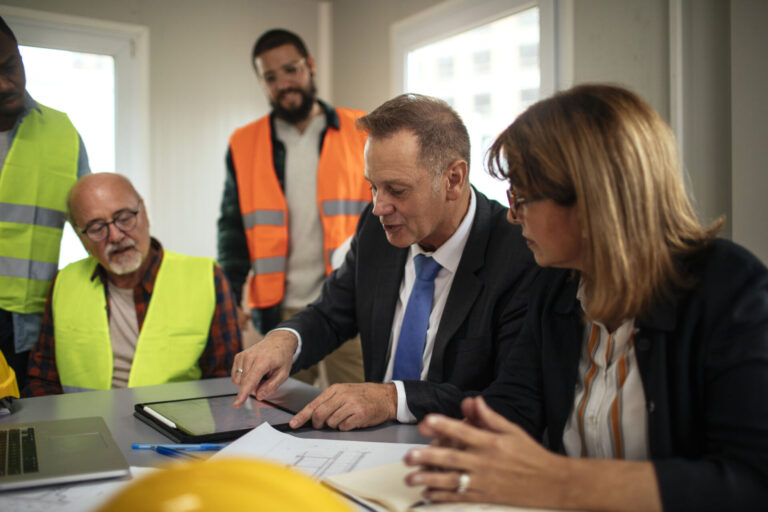
In 2015, women accounted for only 2.2% of production occupations in construction, which is one-sixth the level of “all other industries.” One of the challenges facing women in the construction industry is finding personal protective equipment (PPE) that fits properly. This is a serious issue because PPE that does not fit properly will not adequately protect against occupational hazards and may increase the risk for illnesses, injuries and death. For example, oversized protective clothing can lead to tripping hazards or get caught in machinery and result in a serious injury. Poorly fitted fall protection harnesses may lead to other injuries or may not be effective in the event of a fall. Similarly, gloves that are too big put a worker at risk of coming in contact with chemicals that can cause dermatitis or other skin diseases.

Although OSHA Construction Standards for PPE do not require employers to ensure that the PPE provided fits each employee, doing so will ensure their employees, including female employees, are protected.

A list of examples of commercially-available PPE has been compiled to help employers and women in the trades find PPE that accommodates female anthropometry and can be found here: https://www.cpwr.com/research/research-practice-library/r2p-and-p2r-work/reaching-vulnerable-workers/construction-ppe-for-the-female-workforce

Source: OSHA
Similar Posts

  • How Permitting Delays Are Driving the Housing Affordability Crisis

    FacebookXRedditPinterestEmailLinkedInWhatsAppHow Permitting Delays Are Driving the Housing Affordability Crisis is becoming a central question in today’s housing debate. When you turn on the business news channels, the steady drumbeat is clear: America faces a housing shortage. Yet a closer look reveals a more nuanced reality. While overall single-family and multifamily inventory exists in many markets,…

  • Harris County Commissioners Rodney Ellis and Adrian Garcia Develop a $200,000 Disparity Study Fund To Help Entities Implement MWBE Programs

    FacebookXRedditPinterestEmailLinkedInWhatsAppA disparity study determines whether a government entity, either in the past or currently, engages in exclusionary practices in the solicitation and award of contracts to minority, women‐owned, and disadvantaged business enterprises (MWDBEs). This study can help determine if there is disparity between the availability of firms and the utilization of those firms in its…

  • Five Practical Tips to Punt Frustrations and Obtain Your Building Permit

    FacebookXRedditPinterestEmailLinkedInWhatsAppWhile on an elevator the other day at one of the jurisdictions in Texas, I noticed a Contractor looking flustered attempting to review some documents.  I said, “hang in there” as he replied that he was bouncing around from floor-to-floor and was determined to make progress in obtaining his permit as he was behind schedule…

  • The Top 7 Mistakes Small Contractors Make While Visiting the Permitting Center

    FacebookXRedditPinterestEmailLinkedInWhatsAppGoing to the Permitting Center sucks time from small contractors’ busy days that are often filled with worries about construction tasks and budgets.  Many contractors will call us voicing their frustrations about delays in permitting and the challenge of going back and forth talking with Plan Reviewers that seem not to hear what they are…

  • Construction Safety at Heights

    FacebookXRedditPinterestEmailLinkedInWhatsAppThe very top of a construction project may have the biggest impact on a company’s bottom line. Workers for The Boldt Company, a member of multiple AGC chapters, routinely work 120-130 feet in the air on large power and industrial plant jobsites and the slightest misstep could result in personal injury and devastating losses to…