
DFW International Airport partners with Vanderlande for innovative baggage handling technology

dfw technology

Autonomous vehicles are being used to transfer bags and create a more seamless transfer experience

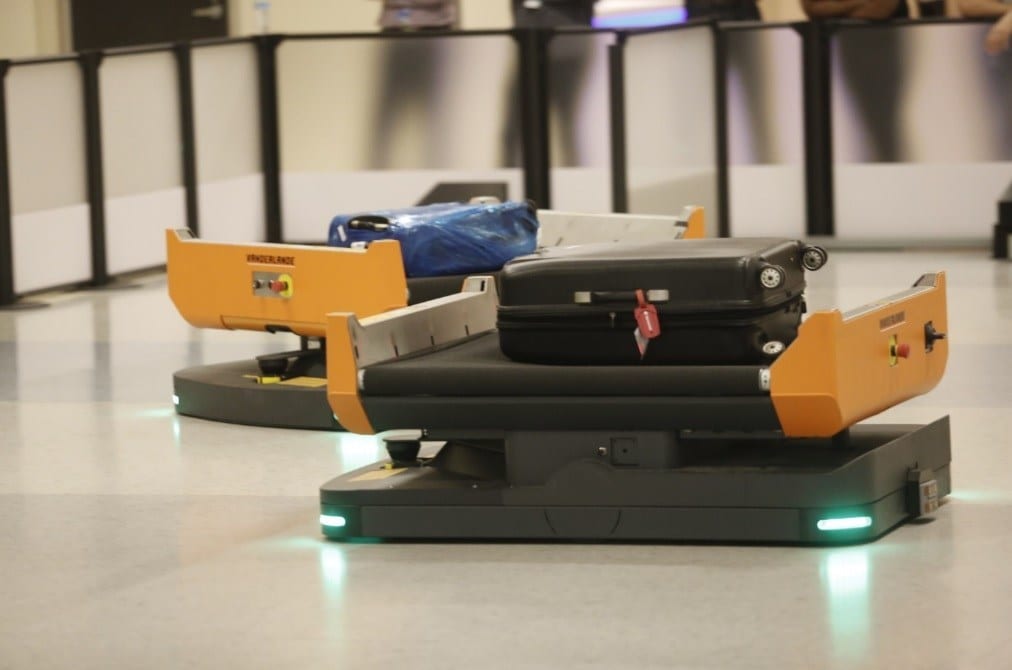
Dallas Fort Worth International (DFW) Airport is using innovative technology to help its customers with more seamless transfers, by introducing Vanderlande’s autonomous vehicle solution FLEET, in the recheck area in Terminal D. The first of its kind robotic system can handle nearly 450 bags per hour and is being tested with transfer passengers who arrive from international flights and connect through DFW.

“DFW is testing the process to see how we might provide our customers with a more seamless journey using the award-winning technology within our current baggage infrastructure, and integrating automation for efficiency,” said Khaled Naja, DFW’s executive vice president of Infrastructure and Development. “As we go through the pilot program, DFW will evaluate this new technology and assess potential applications of robots and autonomous vehicles at different points within the Airport.”

“This particular application is both exciting and challenging for us, because FLEET will be working in a passenger area,” said Andrew Manship, Vanderlande’s Executive Vice President Airports. “Vanderlande believes FLEET aligns with the airport’s vision, because they have a strong commitment to improving the passenger experience, as well as showcasing the latest innovations.”

Customers who participate in the pilot program will use one of four self-bag drop units and identify the airline for their connecting flight using the touch screen. Each FLEET vehicle will transport an individual piece of luggage, transferring the passenger’s bag to the appropriate baggage belt.

Source: DFW
Similar Posts

  • 5G: Houston’s Next Leap in Innovation

    FacebookXRedditPinterestEmailLinkedInWhatsApp5G technology has been touted as the next leap forward in the digital technology arena, and Houston is one of the first cities to roll out the new tech, but what does this mean for Houston’s economy? Well, it could mean a lot.  5G networks need smaller and more closely deployed antennae that can attach…

  • Sleep deprivation among U.S. workers a growing problem, study finds

    FacebookXRedditPinterestEmailLinkedInWhatsAppMore than 1 out of 3 U.S. working adults aren’t getting enough sleep, and the prevalence of sleep deprivation has increased significantly since 2010, according to researchers from Ball State University. The researchers analyzed 2010-2018 data from more than 150,000 working adults who participated in the National Health Interview Survey to determine the frequency of short sleep…

  • 5 technologies boosting productivity on the jobsite

    FacebookXRedditPinterestEmailLinkedInWhatsAppWhen McKinsey released a report in February 2017 about construction’s productivity gap, much attention was given to the industry’s abysmal 1% annual productivity growth rate, which is less than half of the 2.8% global construction growth rate. However, McKinsey’s report said U.S. contractors could increase productivity in part by “infusing digital technology, new materials and…

  • TSU’s HUB Program

    FacebookXRedditPinterestEmailLinkedInWhatsAppMaking an Effort and Moving Forward with Small Businesses By: Vernell Silva As a historically Black University and a member of multiple Chamber of Commerce(s), Texas Southern University’s (TSU) Historically Underutilized Businesses Program, i.e. HUB is aware of their duty to the community. HUB is a minority or woman-owned Texas business that must meet a…

  • Study finds maternity benefits for construction tradeswomen financially feasible

    FacebookXRedditPinterestEmailLinkedInWhatsAppAt a 2016 conference for women in construction, iron worker Bridget Booker stood up and recounted how, as a second-year apprentice, she miscarried after a very heavy day on the job. Booker told the audience she felt she had had no option but to continue to work when she became pregnant. Without work, she would…