METRO Not Proceeding with Federal Grant Application for University Corridor Project 

metro

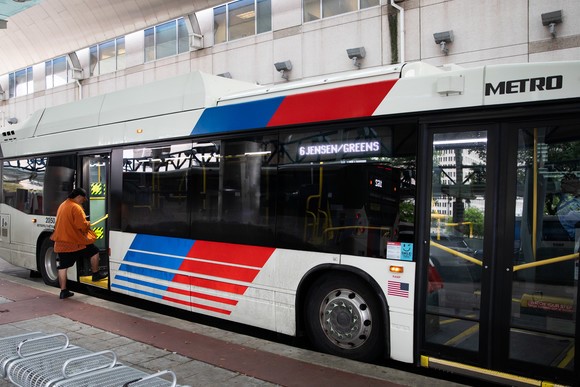
HOUSTON — Based on a financial review, METRO will not proceed with the federal grant application for the University Corridor Project at this time.

According to METRO’s Board of Directors, the Federal Transit Administration has communicated with METRO’s executive staff the agency will not be precluded from applying for funding at a later date, should the project prove to have future financial viability. Additionally, it will not impact other funding opportunities.

Financial estimates for the project in 2019 were aspirational, but the COVID-19 pandemic significantly reduced ridership and increased costs — variables that were not calculated at the time the project was proposed, METRO explained.

The project, as planned, would reportedly put the agency in a position that would financially impact METRO’s day-to-day operations and “severely limit the ability to implement essential services such as increased public safety, bus frequency, bus and train cleanliness, improved bus shelters, and enhanced sidewalks and roadways since the federal grant does not cover the estimated $1.5 billion liability,” a news release said.

“Our priority is a public transit system that is safe, clean, reliable and accessible,” stated METRO Chair Elizabeth González Brock. “METRO’s decision to not proceed with the federal grant process at this time is based upon the need to prioritize improved customer and community essential services and will better position the Authority to increase overall system ridership.”

METRO says it plans to move forward with proof of concept and more viable infrastructure projects that are part of overall growth and development plans for the entire community, such as the Gulfton Transit and Revitalization Project.

“We will continue to engage with METRO customers, community leaders and key stakeholders as we review the viability of future projects and initiatives,” stated Brock.

Source: METRO

Similar Posts

  • Construction Safety at Heights

    FacebookXRedditPinterestEmailLinkedInWhatsApp The very top of a construction project may have the biggest impact on a company’s bottom line. Workers for The Boldt Company, a member of multiple AGC chapters, routinely work 120-130 feet in the air on large power and industrial plant jobsites and the slightest misstep could result in personal injury and devastating losses…

  • Houston Airports Fully Onboard with UA and SWA Initiatives To Boost Minority Representation in Aviation

    FacebookXRedditPinterestEmailLinkedInWhatsApp Houston Airports is fully onboard with two major airlines’ recent focus on increasing diversity in aviation by attracting, training, and equipping more men and women of color.   United Airlines  Houston Airports was pleased to be in attendance on March 9 when United Airlines announced a $100,000 partnership with Texas Southern University (TSU), providing students…

  • RRC Working on Proactive Measures for the Upcoming Winter

    FacebookXRedditPinterestEmailLinkedInWhatsApp By Subcontractors USA News Provider While the Railroad Commission of Texas continues implementing legislation to help fortify the state’s energy supply for weather emergencies, the agency is taking steps to get ahead of the game. As we come off the summer season, the Commission issued a Notice to Operators asking gas facility and gas…

  • 5 Helpful Tips to Quickly Pull Permits on Residential Remodeling Projects To Help Contractors Build Customers’ Dreams

    FacebookXRedditPinterestEmailLinkedInWhatsApp  By Helen Callier, Contributing Writer  Residential housing makes up a large portion of the U.S. Gross Domestic Product (GDP) ranging on average from 4% to 5% according to the National Association of Home Builders. This percentage of GDP includes new homebuilding and remodeling.   In years prior to the pandemic, the residential housing market was…