
Texas construction labor shortage linked to immigration crackdown is emerging as a critical challenge for the state’s booming building industry, as stricter enforcement measures and policy uncertainty continue to shrink the available workforce. Contractors across the state report growing difficulty in staffing projects, leading to delays, rising costs, and increased pressure on an already strained labor market at a time when demand for housing and infrastructure remains high.
Texas’ construction industry is confronting one of its most serious challenges in years: a shrinking workforce fueled by stepped-up immigration enforcement and policy uncertainty.
Builders from San Antonio to the Rio Grande Valley say that federal immigration raids and intensified documentation requirements have reduced the availability of skilled labor, delaying projects and driving up costs at a time when demand for housing, infrastructure, and industrial facilities remains high.
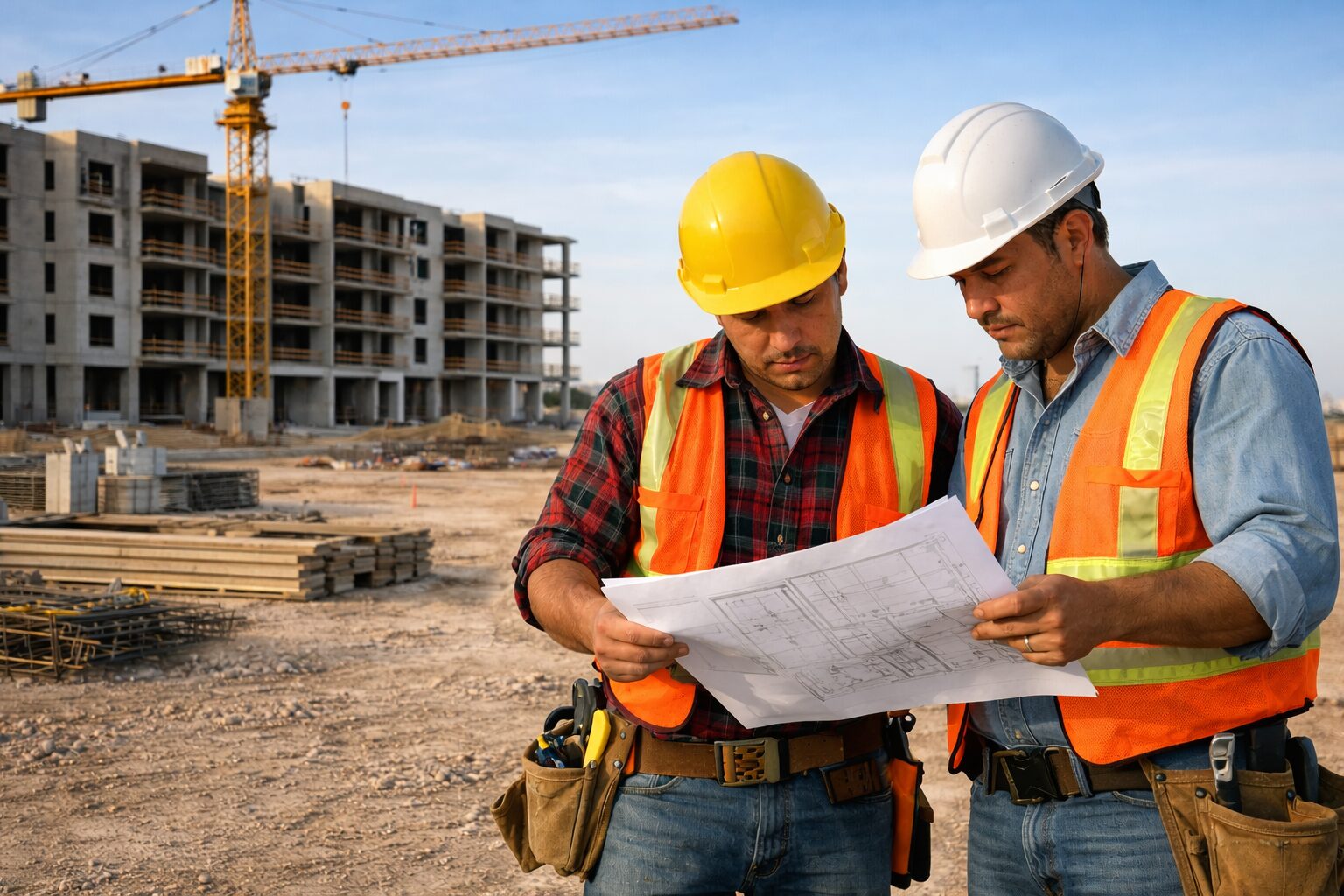
The labor shortage, already a chronic problem, has worsened since late 2025, when federal officials increased workplace audits and enforcement operations across South and Central Texas. Contractors report losing key crews almost overnight, halting residential and commercial projects in communities where immigrant labor has been the backbone of construction for decades.
“Construction can’t continue at this pace without immigrant workers,” said one South Texas homebuilder, who requested anonymity to avoid drawing federal attention. “We’ve got the projects; we’ve got the funding — but we don’t have the people.”
According to data from the Federal Reserve Bank of Dallas, Texas construction employment growth slowed significantly in the final quarter of 2025, even as the state’s broader economy continued to expand. Analysts attribute much of that slowdown to reduced immigration flows and heightened enforcement actions that have discouraged workers from seeking or maintaining employment in the industry.

Immigrant labor accounts for an estimated 40% of the Texas construction workforce, according to the Associated General Contractors of America. Many of those workers occupy critical roles in framing, concrete, roofing, and finish work — trades that have struggled for years to attract U.S.-born workers despite higher pay and training incentives.
The tightening labor market has direct consequences for the state’s infrastructure and housing pipeline. Public projects such as highway expansions and airport upgrades, including the multibillion-dollar renovations at George Bush Intercontinental Airport in Houston, are facing longer completion timelines and potential cost overruns. Private developers, meanwhile, report increased bidding costs and longer lead times for skilled subcontractors.
In response, some state and local officials are calling for immigration reforms that recognize the economic role of foreign-born workers. U.S. Rep. Monica De La Cruz, R-Texas, recently introduced legislation seeking legal work status for certain undocumented laborers with clean records who contribute to the construction and agriculture sectors.
Industry advocates say such measures could provide stability to a workforce vital to maintaining Texas’ growth trajectory. “Without comprehensive reform, we risk slowing the engine of Texas’ economy,” said a spokesperson for the Texas Association of Builders. “We need a legal pathway that balances security with economic necessity.”
While immigration policy remains largely under federal jurisdiction, the business implications are being felt most acutely at the state level. With Texas leading the nation in new construction spending — totaling nearly $90 billion annually — the question is not whether projects will continue, but how efficiently they can proceed amid an evolving labor landscape.
As 2026 unfolds, builders, policymakers, and economists agree on one point: the future of Texas construction depends not only on cranes and concrete, but on the people who make the state’s growth possible.
The Texas construction labor shortage linked to immigration crackdown is disrupting projects across the state, as stricter enforcement reduces the availability of skilled workers. Builders report delays, rising costs, and difficulty staffing jobs, despite strong demand for housing and infrastructure. Immigrant labor—making up a significant portion of the workforce—has been especially impacted, worsening an already tight labor market. Industry leaders warn that without policy adjustments or workforce solutions, the shortage could slow Texas’ construction growth and increase project timelines and expenses statewide.
Source: d-mars.com News Provider