
At first glance, the concept of the “fatal four” may sound like a scare tactic implemented by the Occupational Safety & Health Administration (OSHA) to keep construction workers on their toes. However, these four hazards accounted for nearly 64% of construction worker deaths in 2016.
OSHA has even determined that eliminating the risks of the fatal four would save the lives of 631 American workers a year – a significant portion of these in the construction industry. OSHA’s “fatal four” consists of the following hazards (followed by the percentage of deaths by each in 2016):
- Falls (38.7%)
- Struck by Object (9.4%)
- Electrocution (8.3%)
- Caught-in/between equipment, object, or structure (7.3%)
OSHA has established a number of preventative measures for the aforementioned hazards, all of which should be implemented at construction sites across the country.
Falls
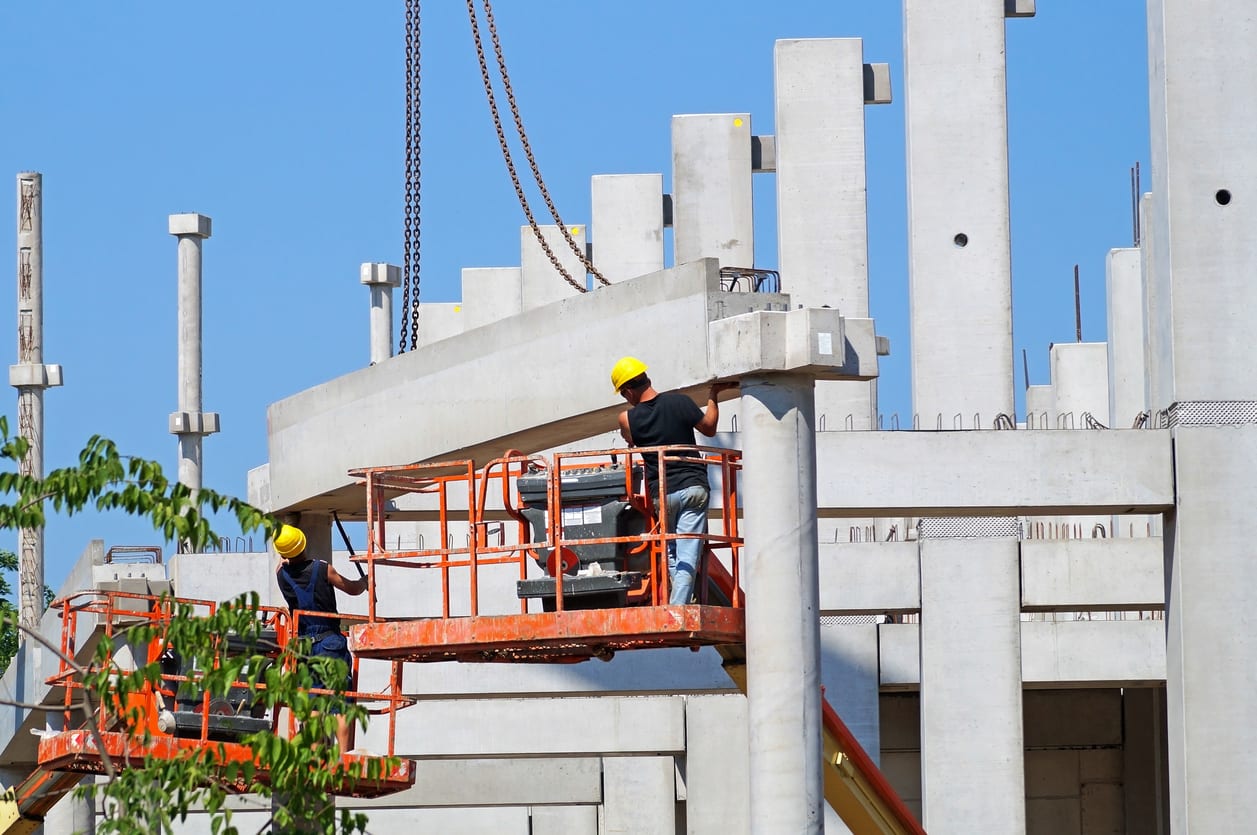
With falls being the deadliest accident of all, and by a long-shot, OSHA has worked extensively to instruct workers how to spot this hazard – and avoid it. Unsteady ladders, scaffold climbing, unprotected roof edges, and roof/floor openings contribute most to falling accidents. While the risk of falling will always be present at construction sites, the risk can be lessened with increased vigilance.
Ladders should always be tested for security and present wherever climbing is needed. Furthermore, personal fall arrest equipment should always be used wherever vertical drops more than 6 feet are present. This harness anchors workers while giving them complete mobility, and protects them if they should lose their footing.
Additionally, floor openings should always be covered and covers should be labeled. Guardrails must also be installed on multi-level structures. Although these guidelines may seem like common sense, various construction site managers fail to execute these. Simple yet life-saving, fall prevention strategies could save 384 workers a year.
Struck by Objects
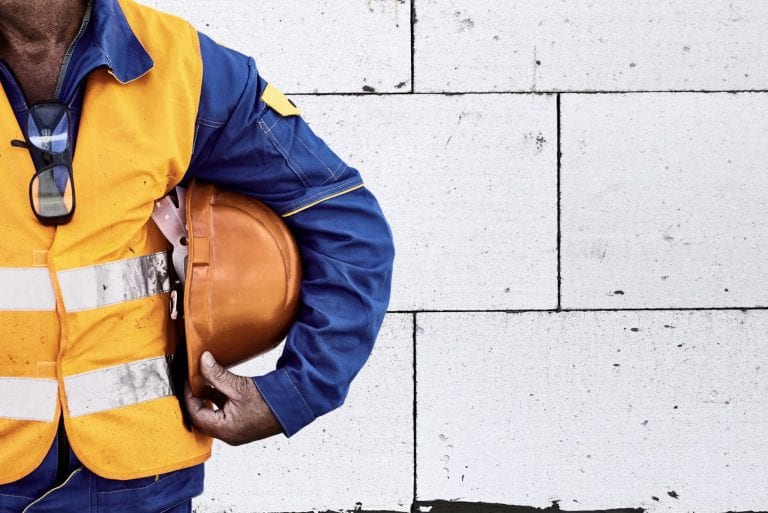
The number of heavy-duty equipment found on construction sites makes it plausible that being struck by a flying, falling, swinging, or rolling object would be a hazard. At a minimum, workers must wear personal protective equipment. This consists of hard hats, safety goggles, and reflective vests. Protecting the head is absolutely crucial, as objects falling from a height can cause serious damage.
In the event a worker is working among cranes, trucks, and other haulage vehicles, wearing a protective vest will increase their visibility for drivers of those vehicles and ensure they don’t get struck by any.
Workers should also always be cautious so as not to position themselves between moving or fixed objects. When in use, all workers (except the operator) should stay away from heavy equipment and operators should ensure the coast is clear before operating the equipment.
Caught-in/Between Objects
This hazard is especially common in trench and excavation sites where cave-ins can occur, causing workers to be pinned. Workers should never enter a trench that is deeper than five feet without a sufficient protective system in place. In this case, a protective system would consist of:
- Sloping: A gradual incline in place for easier access/exit routes
- Shoring: Installing a supportive system to hold up a weak or unstable object
- Benching: Similar to sloping, but consists of implementing a step/series of steps
Lastly, and perhaps most importantly, employers should always ensure machinery safeguards are implemented. Lack of machine safeguards can lead to amputation and crushed fingers/hands if caught in moving machine parts (such as a miter saw, conveyor systems, rotating pump shafts, etc.)
Electrocutions
Most commonly, electrocution on the construction site occurs when an aerial lift, boom, or scaffold comes into contact with a power line, creating a deadly circuit. Electrical safety training may seem like the last thing on your workers’ minds, particularly when compared with the more obvious dangers like falls and heavy machinery. However, every construction worker should know how to deal with exposed electrical work.
Workers should be taught to always locate and identify electrical utilities before starting work. That way scaffolds, ladders, and other such structures can be kept well away from them. The heights and locations of any surrounding power lines should also be noted, so that they are not disturbed by any heavy equipment, such as a crane.
Once work has begun, ground-fault circuit interrupters (GFCIs) should absolutely be installed. These circuit breakers disrupt the flow of an electrical current when they sense a ground fault, protecting workers from electric shock.
The Ultimate Fatal Four Prevention
Protecting your workers against the fatal four is just as much about instilling knowledge as it is about providing the right equipment. Even with all the hard hats, safety goggles, and fall harnesses in the world, workers are still in danger if they don’t know what to look for.
Putting employees through OSHA training sessions on how to spot these dangers could save countless lives. OSHA’s website contains worksheets, PowerPoints, and training manuals geared toward fatal four outreach training. Sessions can also be purchased through third-party providers for a more in-depth look at prevention.
The best prevention method against the fatal four is proactivity, which ultimately lies in the hands of construction site managers and employers.
Source: OSHA