


Thanks to research work from a Cullen College of Engineering professor and his students, new standards for high-strength steel have been adapted by the Masonry Society (TMS), the organization that specifies building code requirements for Masonry Structures in the United States.
Dimitrios Kalliontzis is an assistant professor in the Civil and Environmental Engineering Department and the mentor of the Structural Performance & Fluid-Structure Interaction (SP-I) LAB. He said that after significant work in UH’s structures lab and rapid dissemination of findings to committee meetings and national conventions, his group’s proposal to permit the use of high-strength steel bars was approved by the TMS 402/602 Main Committee.
“This is a huge first milestone in our effort toward high-strength steel reinforcement, and it all happened based on research work done at UH along with continuous professional service in TMS committees,” Kalliontzis said.
According to Kalliontzis, this code change would be the biggest for the current code cycle for TMS 402/602 Building Code Requirements and Specification for Masonry Structures. The code change concerns the first step toward a broader adoption of high-strength steel, a market that has grown from $29.6 billion in 2019 to $44.2 billion in 2024.
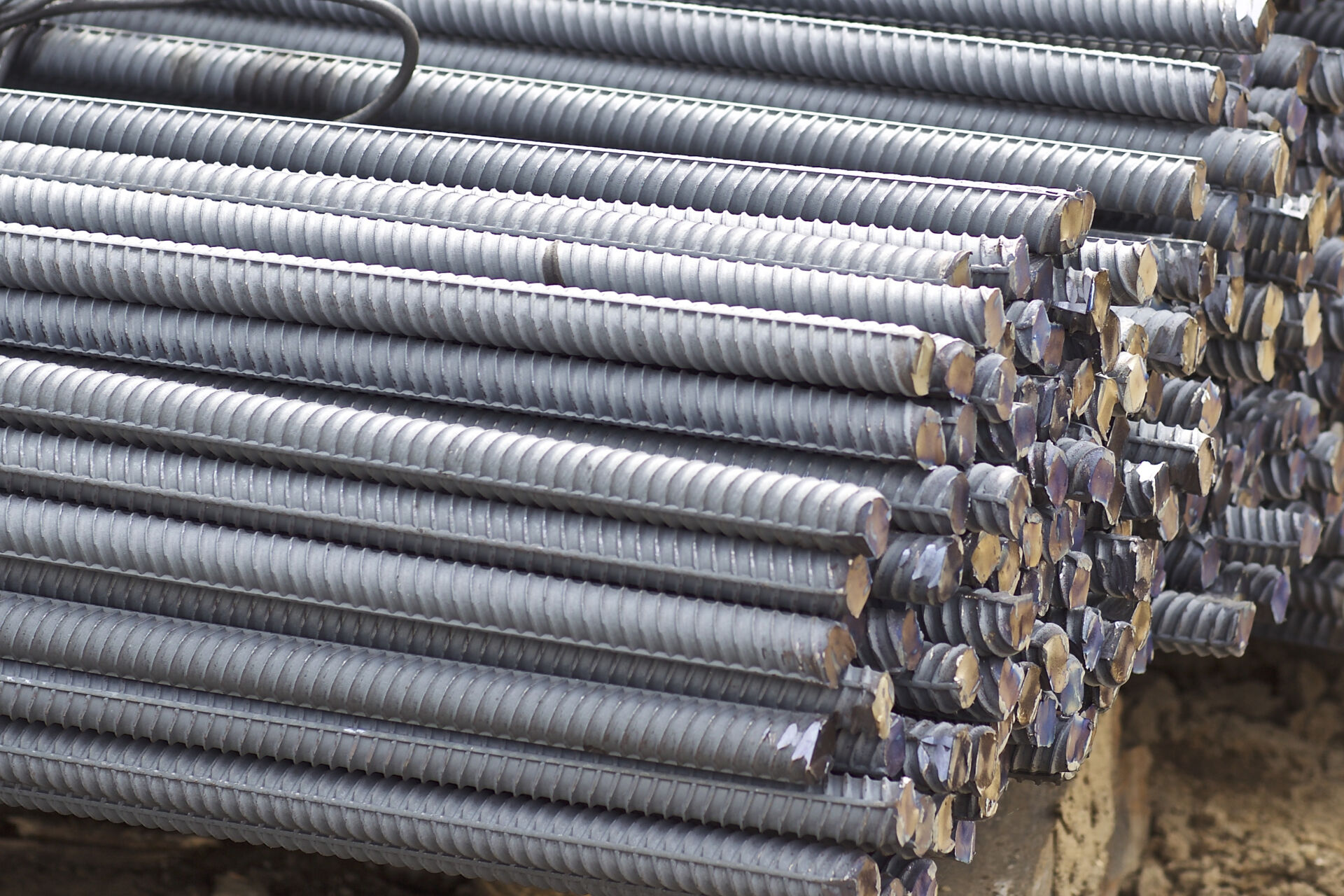
Initially, Grade 40 bars were the standard in the United States in the first quarter of the 20th Century, but they were gradually, but not completely, replaced with Grade 60 bars in later years. Grade 80 bars were formalized by ASTM standards in 2009.
“Until the 2022 version of masonry design standards (TMS 402/602-22), practitioners were restrained from using high-strength steel bars,” he said. “Based on research findings and experiments performed at the University of Houston, TMS 402/602 has recently approved the adoption of Grade 80 reinforcing bars in the axial and flexural design of structural masonry. The research program at the University of Houston continues the necessary experimental work to enable the use of Grade 80 bars for special shear walls and in shear design, among other usages and applications.”
Research findings from Kalliontzis’ group showed that the adoption of high-strength steel bars can reduce reinforcing material costs by up to 25% with a corresponding reduction of carbon footprint of 33% in masonry buildings.
“This code adoption opens a new door for the masonry industry to modernize its construction practices by adapting to contemporary steel materials that are becoming more and more prevalent,” he said. “As it has been done with Grade 40 bars, it is likely that future construction will slowly abandon Grade 60 bars, making high strength rebars the only available option in the market. Hence, the adoption of high strength rebars is both a requirement for modernization as well as a requirement for survival. And that has been made possible by research performed at the University of Houston.”
Kalliontzis said the findings wouldn’t have been possible without the help of several of his students — Omar Khalid, a Master’s degree graduate, and current Ph.D. students Waleed Khan and Samvid Parajuli. John Hochwalt from the Seattle office of KPFF served as the industry advisor for the team’s research.
Source: University of Houston (Edited by Subcontractors USA)