
HOUSTON — Honeywell announced the launch of its Battery Manufacturing Excellence Platform (Battery MXP), an artificial intelligence (AI)-powered software solution designed to optimize the operation of gigafactories from day one by improving battery cell yields and expediting facility startups for manufacturers.
With traditional standalone solutions, battery manufacturers’ material scrap rates can be as high as 30% at steady state and even higher during the facility startup process. This practice can lead to millions of dollars of wasted energy and material while a gigafactory slowly scales to a more efficient and profitable production over several years, Honeywell says.
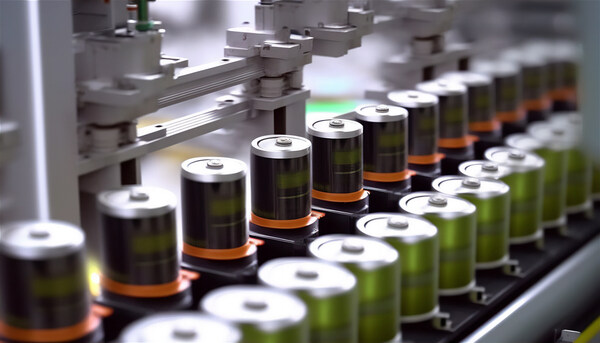
Battery MXP incorporates AI techniques in the manufacturing process, which enables the detection and remediation of quality issues before they result in scrapped material. The solution then utilizes machine learning to identify conditions that lead to quality issues and turns this data into action-oriented insights that manufacturers can use to improve efficiency and productivity.
By delivering powerful data that can improve quality control and decision making on the plant floor, Battery MXP is designed to help manufacturers cut production ramp-up time, reduce startup material scrap rates by 60% and increase delivery rates to meet the growing demand for lithium-based batteries.
“With Honeywell’s Battery MXP and its automation capabilities, we will be able to quickly and effectively establish a foundation for our network of gigafactories,” said John Kem, president of American Battery Factory. “This solution is vital in our manufacturing operation because it allows us to reduce scrap and scale up quickly, while also ensuring we meet the U.S. and international demand for high quality lithium iron phosphate batteries as we prepare for the unprecedented surge expected over the next decade.”
By providing bidirectional traceability and genealogy, Battery MXP tracks battery cells from raw material to finished product in real time, helping to ensure product quality at every step. The solution also helps to address other key challenges faced by battery manufacturers by offering solutions for process controls, workforce management and thermal runaway battery fire prevention. These safety elements aid both operators in the gigafactory and end-users of the batteries to stay safe.
“The electrification of everyday life continues to increase global demand for quality lithium-ion batteries to power electric vehicles, consumer electronics and battery energy storage systems,” said Pramesh Maheshwari, President of Honeywell Process Solutions. “With the construction of more than 400 gigafactories planned worldwide by 2030, Honeywell’s Battery MXP is a crucial technology that enables manufacturers to maximize cell yields and reach peak production much quicker than traditional methods.”
The use of automation to advance the world’s electrification journey supports Honeywell alignment of its portfolio to the automation and energy transition megatrends. As a key player in the global energy transition, Honeywell is applying its complete portfolio in industrial automation, cyber secure IoT (Internet of Things), material handling, building automation and safety solutions to help battery manufacturers bring reliable products to the market as quickly as possible to meet the projected demand for battery cells.
For more information on Battery MXP and Honeywell’s gigafactory solutions, visit process.honeywell.com/us/en/industries/sheet-manufacturing/lithium-ion-batteries.